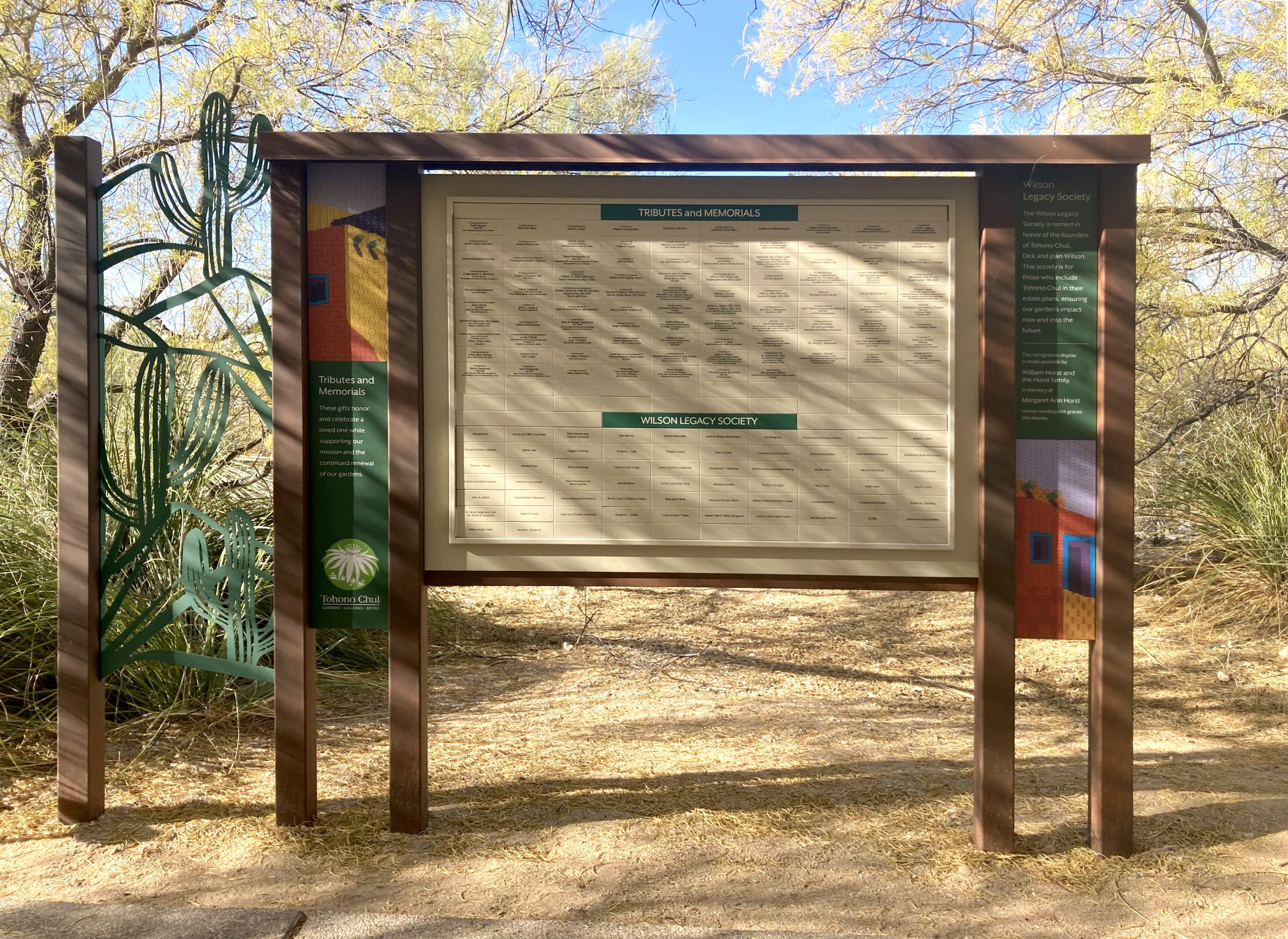
Outdoor Donor Recognition Display for Tohono Chul
A Climate-Resilient, Dark Sky–Compliant, Expandable Tribute & Memorial System
Client Overview
Partners In Recognition designed and fabricated a custom outdoor donor recognition display for Tohono Chul Botanical Garden in Tucson, Arizona. The project required a recognition system capable of withstanding extreme desert temperatures while complying with Tucson’s Dark Sky lighting ordinance. Using Corten steel structural framing, exterior-rated CHPL photo panels, and UV-stable Corian® donor nameplates, PIR engineered a durable, expandable recognition environment. The modular magnetic nameplate system allows the display to grow as new tributes and memorial gifts are added.
The Challenge: Designing an Outdoor Donor Recognition Display for the Sonoran Desert
Creating an outdoor donor recognition system in southern Arizona requires more than attractive design. Instead, it demands engineered performance.
Project Requirements:
- Withstand 100+°F temperatures
- Tolerate 40° daily temperature swings
- Comply with Tucson’s strict Dark Sky Ordinance
- Allow for easy donor name updates
- Provide long-term expansion capacity
- Enable movable category plates and nameplates
- Integrate full-color exterior photo panels honoring a donor’s late wife
The display needed to be beautiful, compliant, expandable, and easy to manage—without ever looking like it was “added onto.” Furthermore, it had to maintain visual harmony with the surrounding desert landscape.
Strategic Approach to Engineering an Outdoor Donor Recognition Display
Partners In Recognition, Inc. (PIR) collaborated closely with Tohono Chul’s Director of Strategic Growth to engineer a system built specifically for desert durability and long-term stewardship. From the beginning, the focus was on combining architectural aesthetics with resilient materials.
Key Strategic Priorities:
- Specify materials proven in extreme outdoor environments
- Design lighting compliant with local Dark Sky regulations
- Build in structured expansion planning from day one
- Create a fully modular system for future category resizing
- Ensure simple, non-disruptive donor name updates
Ultimately, the solution required both architectural sensitivity and advanced material engineering.
The Solution for Designing and Building an Outdoor Donor Recognition Wall
1. Climate-Resilient Structural Materials
First, PIR engineered a material palette capable of withstanding intense desert conditions while maintaining long-term visual quality.
Corten Steel Framework
The structural foundation was fabricated from Corten steel—ideal for harsh outdoor conditions. Its weathering properties form a protective oxide layer that resists corrosion while complementing the desert aesthetic. As a result, the structure remains both durable and visually integrated with the natural surroundings.
Custom Exterior High-Pressure Laminate (CHPL) Photo Panels
Full-color memorial panels were produced using exterior-rated CHPL. These panels fuse digital imagery with melamine overlays on a phenolic resin core—delivering:
- UV resistance
- Moisture resistance
- Fade protection
- High durability in high-traffic areas
In addition, this process allowed detailed embroidery artwork—created by the donor’s late wife—to be permanently and beautifully honored outdoors.
Corian® Nameplates
Etched, paint-filled, and clear-coated Corian nameplates were selected for:
- Fade resistance in direct sunlight
- Dimensional stability
- Long-term clarity and durability
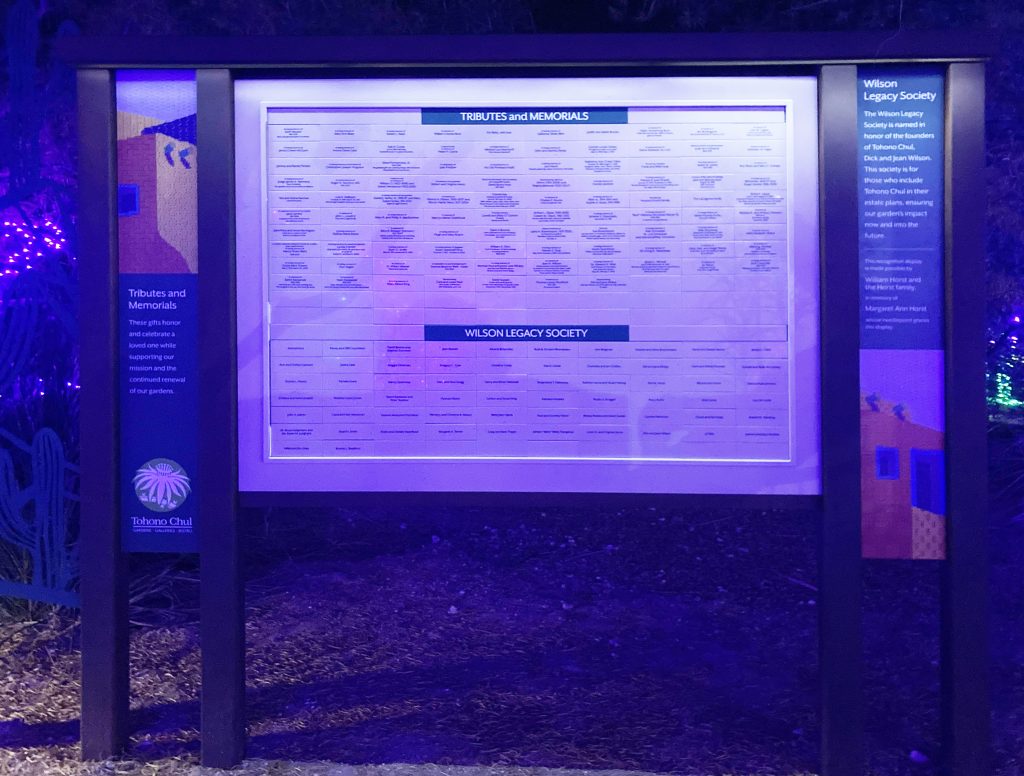
2. Dark Sky–Compliant Outdoor Lighting
Tucson’s Dark Sky Ordinance requires:
- Fully shielded fixtures
- Downward-directed light
- Warm-toned bulbs
- Reduced glare and light pollution
To meet these requirements, PIR specified Winona 35K LED fixtures with custom-fabricated shielding hoods to ensure compliance while providing elegant nighttime visibility.
As a result, the display delivers clear nighttime readability while protecting the integrity of the desert night sky.
3. Magnetic, Fully Reflowable Recognition System
To ensure maximum flexibility, we used PIR’s MagTech System:
- Rare-earth magnets were used to mount nameplates
- Category plates were designed to live within the nameplate grid
- Categories can expand or contract as donor levels shift
- Blank plates were included for future engraving and reuse
This allows Tohono Chul to:
- Add new donors without reordering structural elements
- Resize giving categories without redesign
- Maintain visual balance as giving patterns evolve
4. Planned Expansion Without “Add-On” Appearance
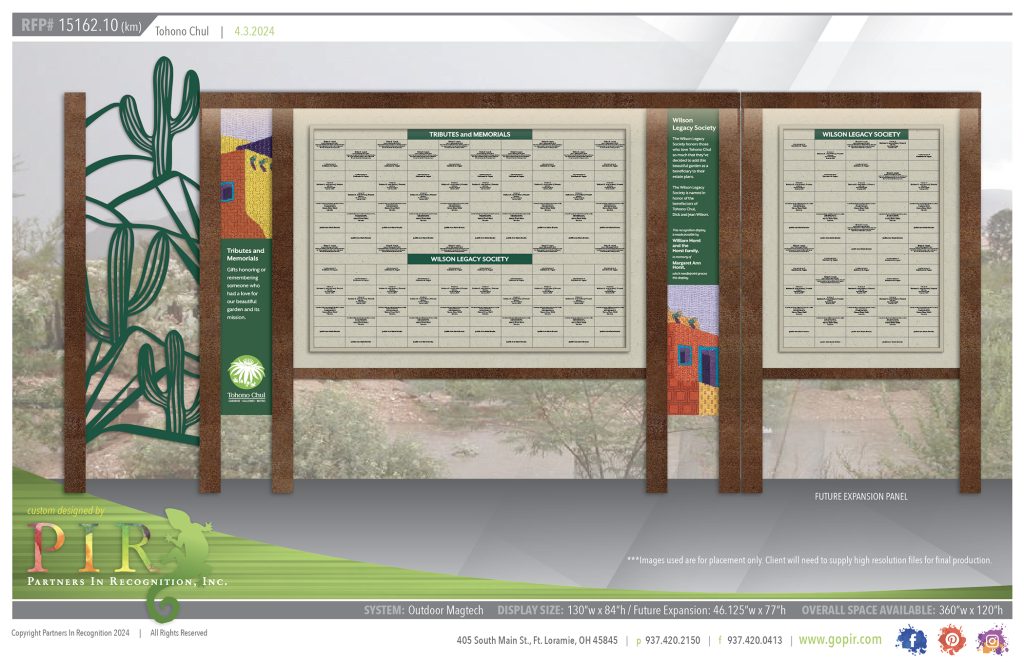
Equally important, PIR pre-engineered an adjacent expansion panel into the master design plan. When growth requires additional recognition space:
- The new panel integrates seamlessly
- Structural continuity remains intact
- Budget efficiency is preserved
- The design never appears retrofitted
Therefore, this proactive expansion strategy protects both aesthetics and long-term capital investment.
Implementation Process
The project moved through 10 design revisions to ensure complete stakeholder alignment. Throughout the process, careful coordination ensured that both technical and aesthetic goals were met.
Precision Manufacturing & Quality Control
- On-site dimensional verification
- Comprehensive mechanical drawings documenting all materials and mounting systems
- Color proof approvals for full-color exterior panels
- Pre-assembly build verification prior to crating
- Installation documentation provided for accuracy
As a result, this disciplined manufacturing process ensures long-term structural integrity in demanding climates.
The Outcome for an Outdoor Donor Recognition Display
The finished outdoor donor recognition system successfully achieved:
✔ Durability in 100+°F heat
✔ Stability across 40° daily temperature swings
✔ Full compliance with Tucson’s Dark Sky Ordinance
✔ Expandable recognition capacity
✔ Magnetically movable nameplates and categories
✔ Exterior-rated, full-color memorial photo integration
✔ Pre-designed future expansion readiness
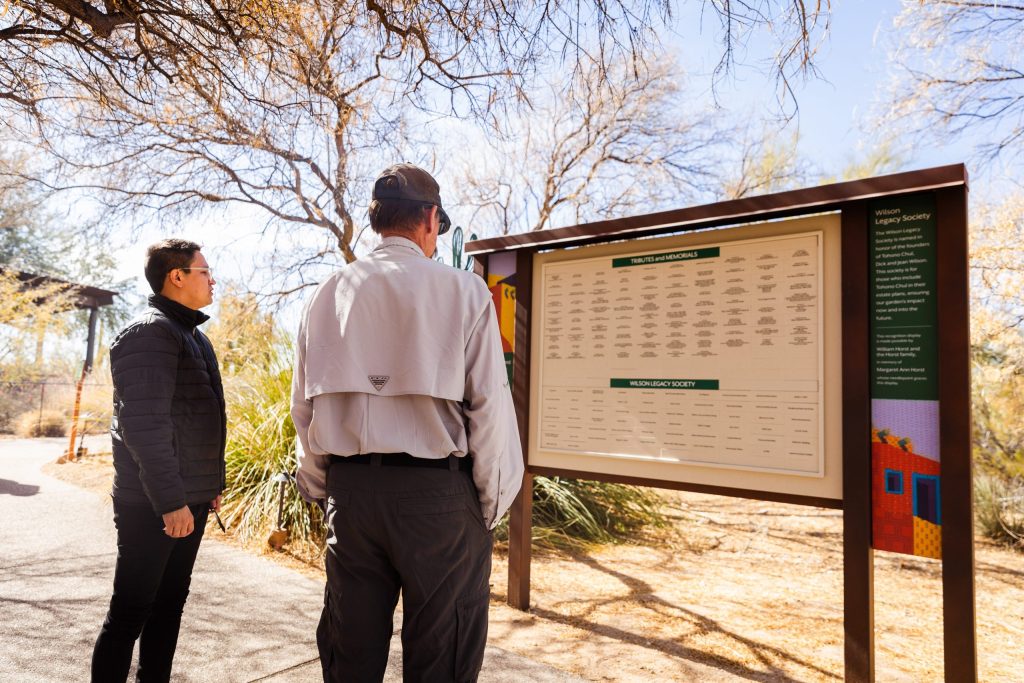
Most importantly, the display provides a lasting tribute space that reflects both the mission of Tohono Chul and the generosity of its supporters.
Why This Project Matters
Outdoor donor recognition systems require specialized expertise. Climate extremes, UV exposure, lighting codes, and long-term expansion planning cannot be afterthoughts.
In this case, the project demonstrates how architectural integration, engineered materials, and future-focused planning create a high-performance donor recognition system built for decades of stewardship.
View other PIR outdoor displays here.
Frequently Asked Questions
What materials are best for outdoor donor recognition walls in extreme heat?
Corten steel, exterior-rated CHPL panels, and UV-resistant Corian® are proven solutions for high-temperature and high-UV environments.
How do you design a donor wall that complies with Dark Sky regulations?
Use fully shielded, downward-directed LED fixtures with warm color temperatures and custom hoods to prevent upward light spill.
Can outdoor donor recognition displays be expanded later?
Yes. By engineering structured expansion panels and modular magnetic nameplates, systems can grow without redesigning the entire installation.
How do you prevent fading on outdoor recognition nameplates?
Specify UV-stable materials, etched and paint-filled lettering, and protective coatings designed for exterior use.
PIR Insight
This project illustrates how an outdoor memorial display can:
- Withstand extreme climates
- Meet strict municipal lighting codes
- Offer long-term flexibility
- Preserve donor stories through durable materials
Furthermore, the same engineering principles can be adapted for hospitals, universities, botanical gardens, and nonprofits nationwide—regardless of climate.
Planning an Outdoor Donor Recognition Display?
If your organization needs an outdoor, expandable, code-compliant donor recognition system, PIR designs and manufactures fully customized solutions engineered for performance and longevity.
Ultimately, the goal is simple: create recognition environments that honor generosity while standing the test of time.
Let’s build something that honors generosity—without compromise.