How to Combine Past Donor Recognition into One Display
Client Overview
The Mercer County District Library (MCDL) serves the residents of Mercer County, Ohio, with its main branch located in Celina. In addition to traditional library services, MCDL offers extensive local history and genealogy resources, acting as a central hub for documents, newspapers, and family records tied to the region. As part of its ongoing efforts, the library sought to combine past donor recognition into one display.
As a community cornerstone, the library plays an important role in preserving the county’s legacy. Because of this, donor recognition is more than acknowledgment—it is a way to honor the individuals and families who have contributed to that history over time.
The Challenge to Consolidate Donor Recognition
Over decades, the library accumulated many different forms of donor recognition dating back to the 1970s, including:
- Cast bronze plaques
- Etched bricks
- Printed acrylic plaques
- Oil painted portraits
- Etched zinc on wood bases
- Glass panels over brushed aluminum
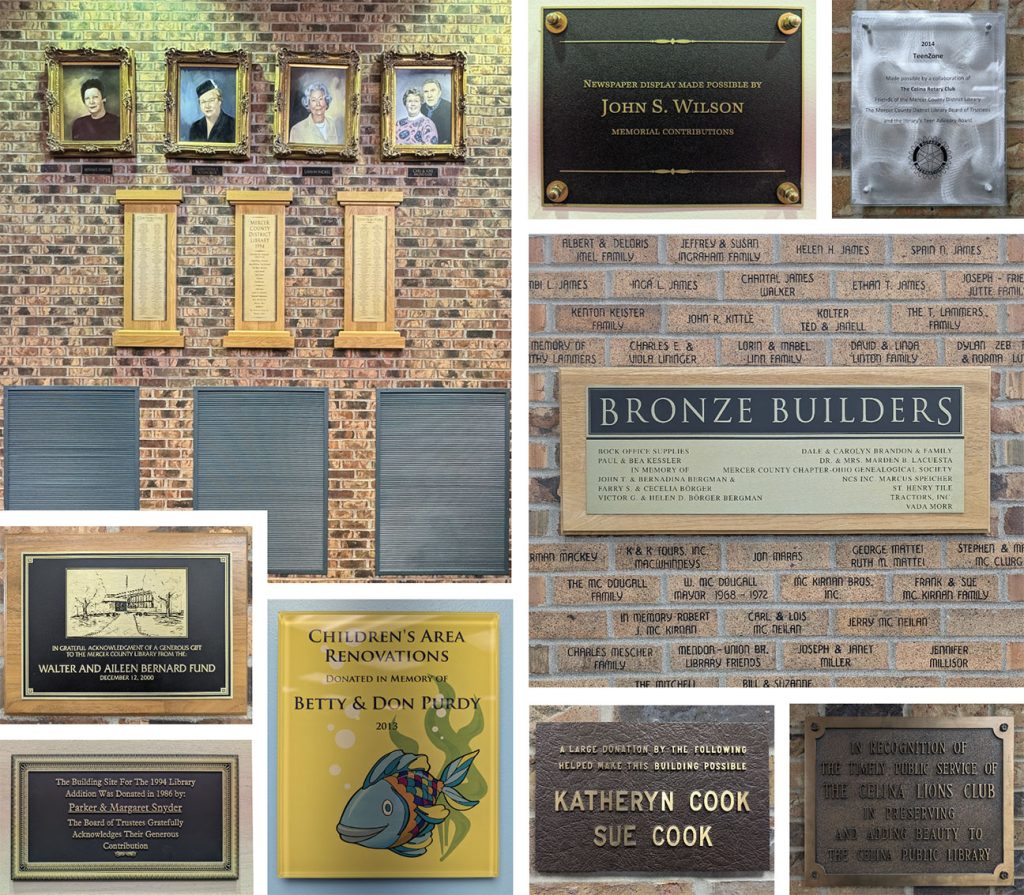
The goal was to consolidate all the recognition into one cohesive display. However, the physical space introduced several complications. Prominent wall vents occupied prime display areas which would cause the new recognition to be placed higher than normal, possibly making names difficult to read. Installation would require mounting into a brick wall, adding structural limitations, and the new design was an irregular shape adding to mounting difficulties. On top of that, the system needed to remain flexible enough to allow names to be added or rearranged over time.
The Strategy to Combine Multiple Donor Recognition into One Display
To address both historical and functional needs, the strategy focused on three key priorities:
- Unification: Create a single system capable of incorporating all historical recognition
- Durability: Engineer a mounting solution that securely anchors into brick while supporting varied materials
- Legibility: Ensure donor names are large and clear enough to be easily read—even above existing vents
The Solution
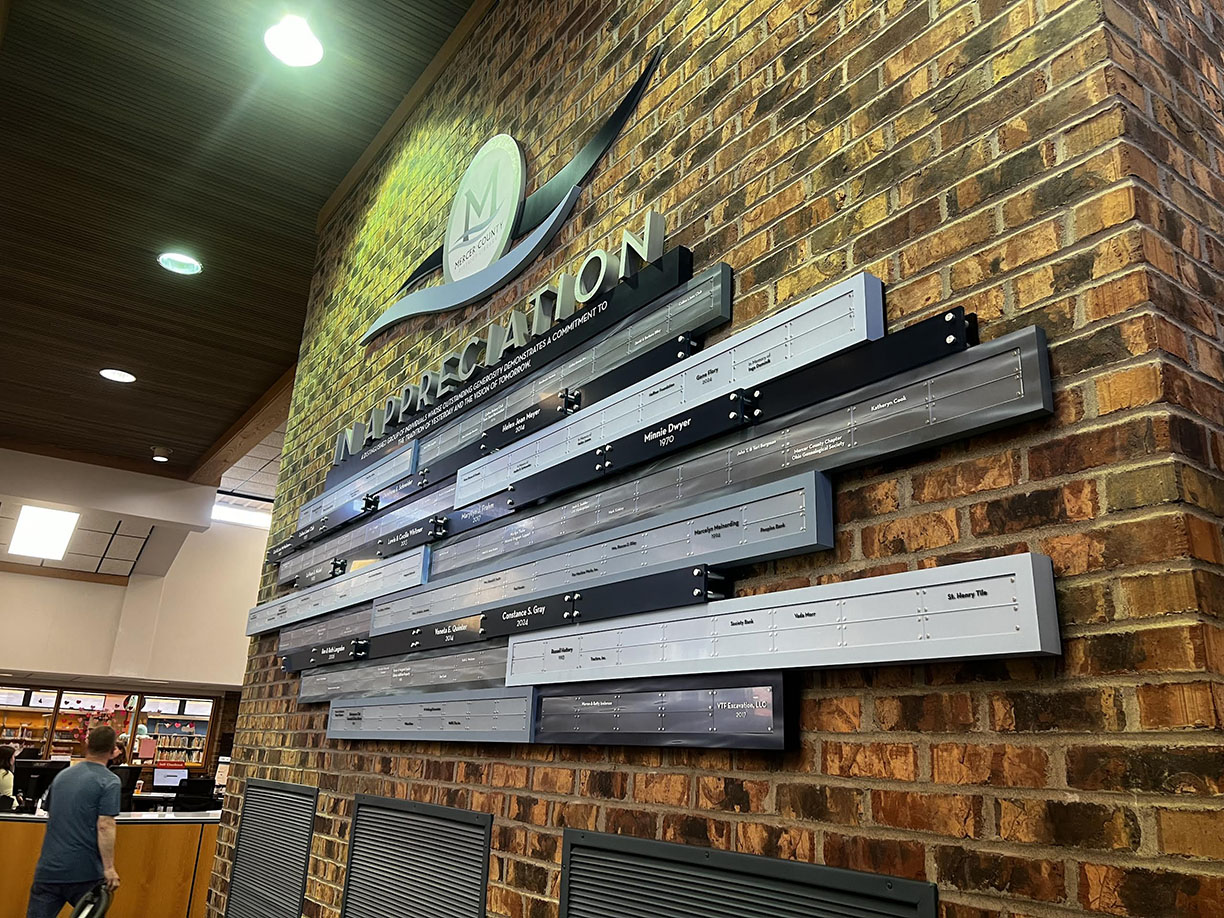
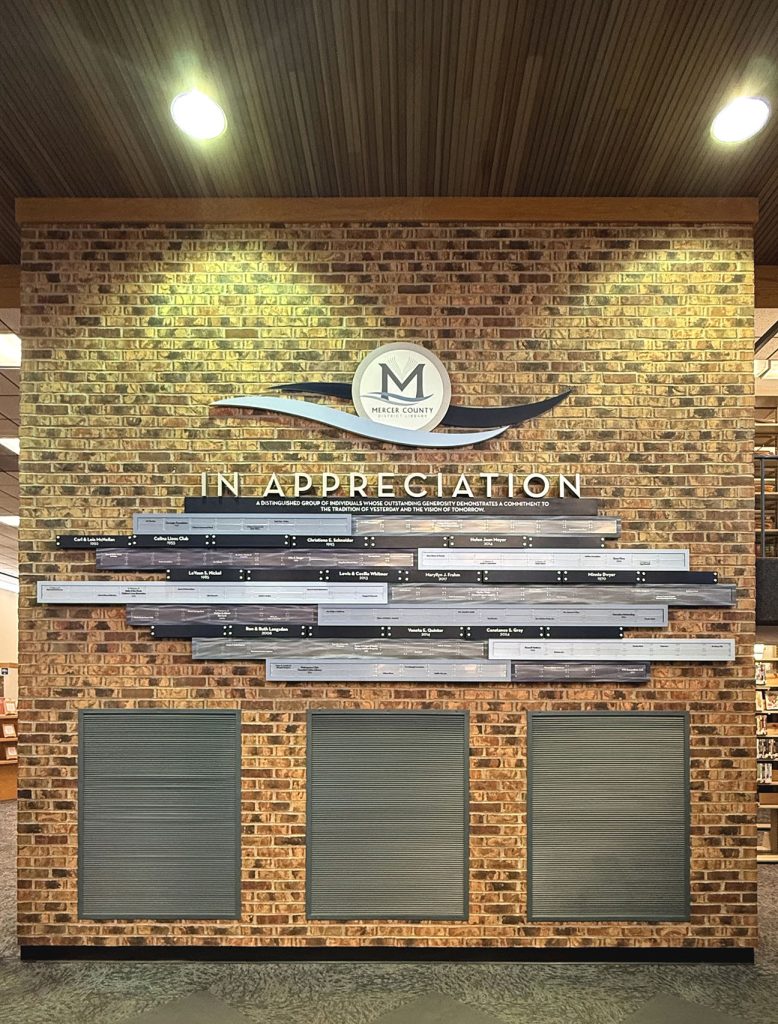
A custom modular system was developed to replace historical recognition into a single, cohesive display. Laminate bases and framed panels established a consistent visual structure for acrylic nameplates.
Acrylic nameplates were incorporated using a combination of standoff mounts and magnetic attachment methods. This provided the flexibility to add, remove, or reposition names without disrupting the overall display. Careful layout planning allowed the system to integrate seamlessly around the existing vents, maintaining visibility while working within the constraints of the space.
The result was a structured yet adaptable environment that incorporated a collection of legacy recognition into a unified recognition system.
Execution of Combining Past Donor Recognition into One Display
Installation required precision to ensure both stability and long-term usability. Hardware was designed to lag securely into the brick wall, creating a reliable foundation for the system. Panel placement was aided by full-size cardboard templates, allowing the team to work around vents and accurately map the irregular wall layout. This ensured that each section aligned visually while maintaining readability.
The use of magnetic and standoff mounting methods made future updates simple and efficient, while thoughtful use of contrasting colors and appropriately scaled typography improved legibility throughout the display. The final installation reflects a careful balance between engineering and design, supporting both function and aesthetics.
Outcome of Merging Donor Recognition into One Cohesive Display
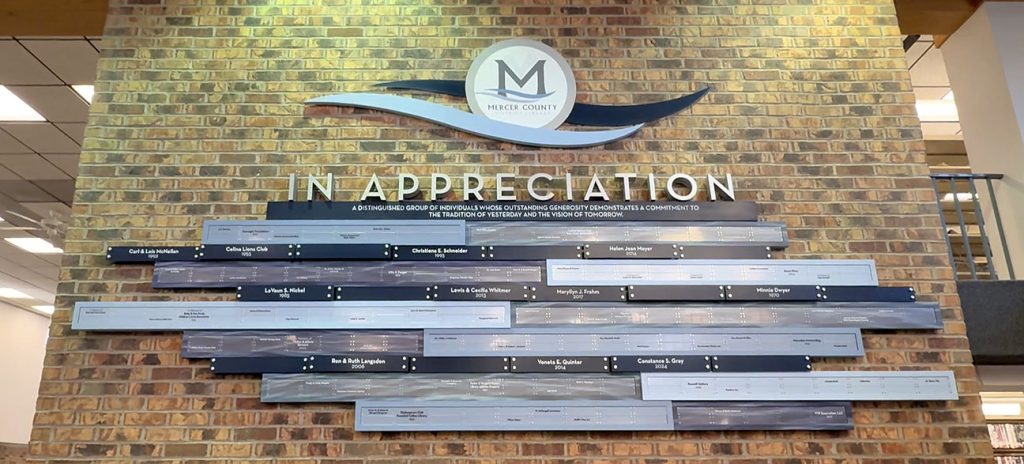
The completed display successfully consolidated decades of donor recognition into a single, cohesive system. Names are now clearly visible and easy to read, and the materials and format feel intentional rather than disconnected.
Equally important, the system is built for the future. It allows for ongoing updates without requiring redesign, ensuring that new donors can be recognized seamlessly over time. By working with the architecture instead of against it, the display achieves a sense of harmony within the space while elevating the visibility and impact of every name included.
Key Takeaways
- Consolidation requires structure: A modular system is essential when combining multiple legacy formats
- Design must solve for obstacles: Vents, wall materials, and layout constraints should drive—not limit—the solution
- Flexibility is critical: Donor recognition should evolve alongside future campaigns
- Legibility matters: If names can’t be easily read, recognition loses its impact
If you’re looking to bring multiple donor recognition elements into one cohesive display, the right strategy can transform complexity into clarity—while preserving the history behind every name.