Donor Recognition That Reflects Mission, Identity, and Growth
At ORCAT – Grayvik Animal Center, donor recognition needed to do more than list names. It needed to feel like the organization itself.
In a community where supporters are closely tied to the mission, recognition carries weight. It reflects not just generosity, but shared purpose. The challenge was creating something that could honor that connection while still working within the realities of space, growth, and long-term use.
When Recognition Becomes Part of the Story
The idea started with something simple: the organization’s identity.
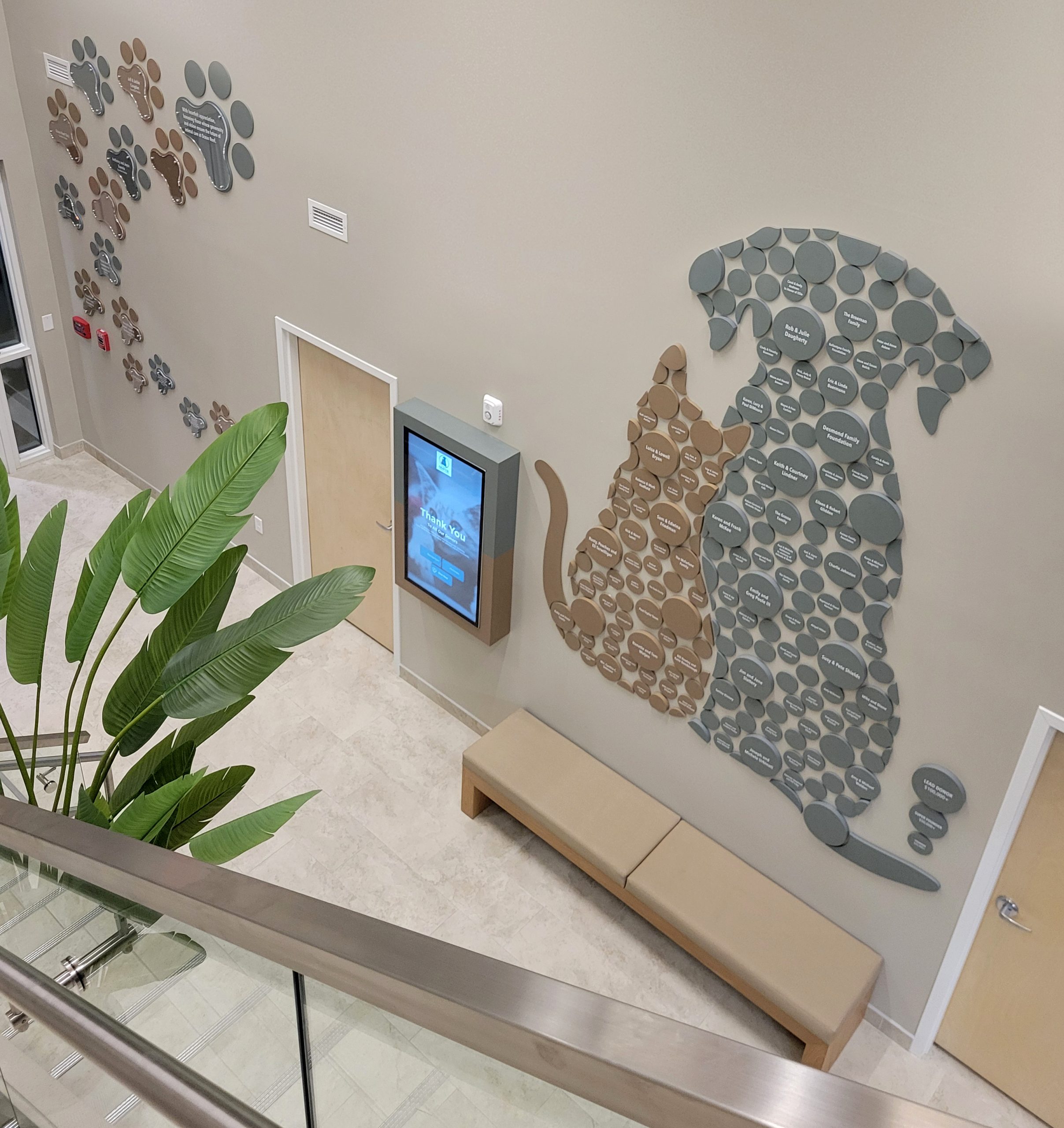
Dog and cat silhouettes are already meaningful within the Ocean Reef community. Rather than adding recognition around that identity, the goal became integrating it directly into the display.
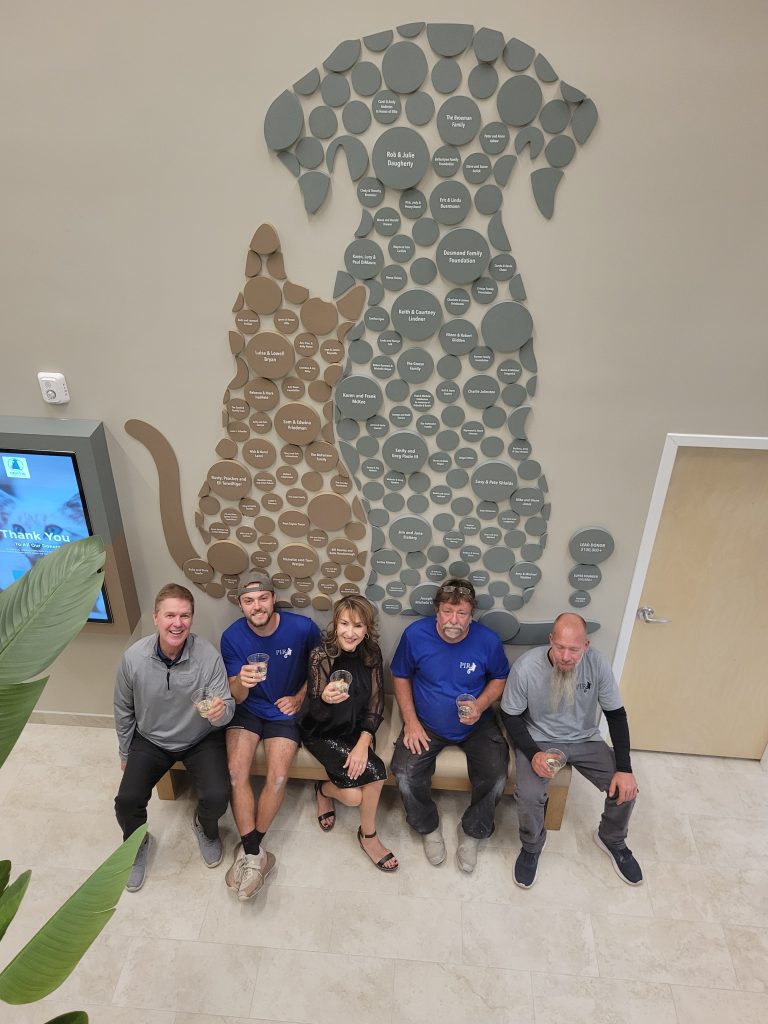
That decision changed everything. Instead of separating design and recognition, donor names became the structure itself – forming the silhouettes rather than sitting beside them. What could have been a traditional donor wall became something more connected and more intentional.
Balancing Growth Without Losing Clarity
Like many organizations, ORCAT faced a familiar challenge: how to recognize a large number of donors without losing readability or hierarchy.
Smaller gifts matter. Larger gifts matter. The system has to respect both.
Rather than forcing everything into a grid, the solution relied on variation – different sizes, spacing, and placement working together to create structure without rigid lines. From a distance, the shapes are clear. Up close, individual names still stand on their own.
Just as important, the display wasn’t designed to be finished. It was designed to grow.
Future donors can be added without disrupting what’s already in place. The composition holds, even as participation increases.
Designing for the Space, Not Just the Wall
The installation sits within an active interior environment, not a blank canvas.
Seating, the way people move through the setting, and a digital display all had to be considered alongside the recognition itself. The result is not just a wall feature, but part of the experience of the space.
The digital component adds another layer – allowing for storytelling, messaging, and expanded recognition – without competing with the physical display. Everything works together without pulling focus in different directions.
What This Approach Makes Possible
The finished installation does what it needs to do without over-explaining itself. It reflects the organization, recognizes donors clearly and leaves room for what comes next. Most importantly, it avoids a common problem: outgrowing its own design.
Recognition solutions that aren’t built for change often require rework, expansion panels, or full replacement. This one doesn’t. It was planned with that reality in mind from the beginning.
A Different Way to Think About Donor Recognition
Projects like this tend to shift the conversation.
Instead of asking: “What should the donor wall look like?”
The better question becomes: “What should donor recognition do over time?”
At ORCAT – Grayvik Animal Center, the answer wasn’t about decoration. It was about alignment – between mission, identity, and the people who support both.
Considering Your Own Recognition Project?
If you’re thinking through how donor recognition should function within your space, your organization, and your long-term plans, it helps to start with the right questions.
Explore how recognition solutions are planned, structured, and built to support growth over time.
Partners in Recognition can help.