Museum Donor Recognition Wall Honors Visionaries
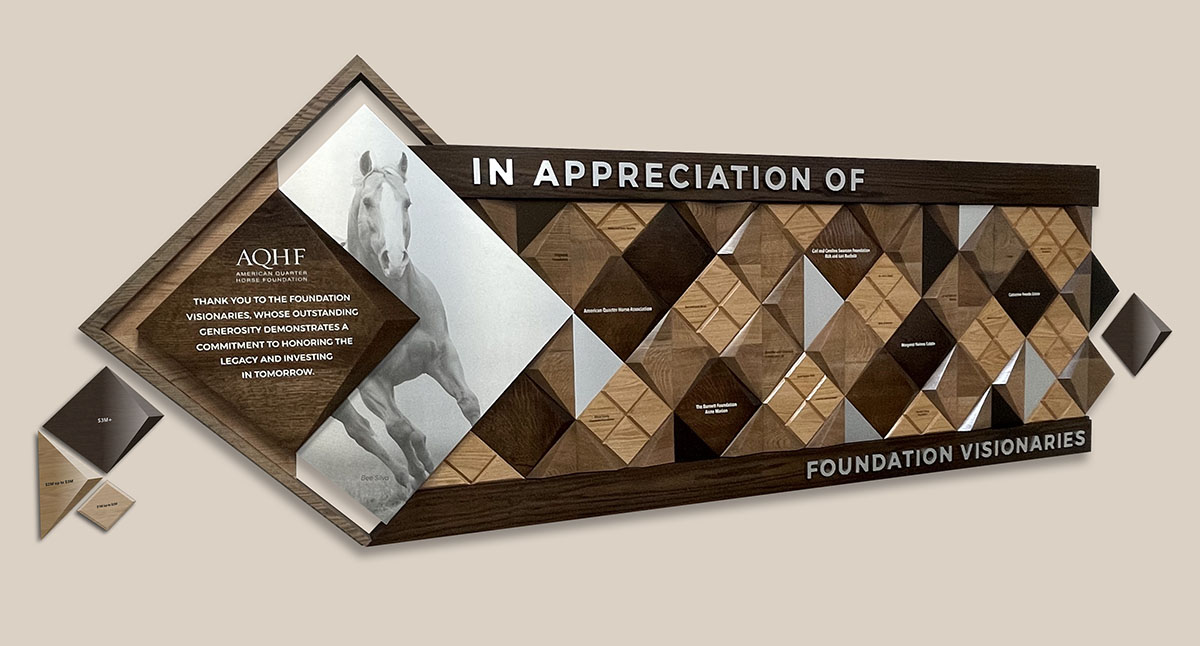
The American Quarter Horse Foundation wanted a museum donor recognitionwall that would honor its most generous supporters while fitting naturally into the American Quarter Horse Hall of Fame & Museum in Amarillo, Texas. Partners In Recognition designed a dimensional donor display that combines warm wood tones, metallic accents, equine imagery and our MagTech® donor recognition system. Just as important, the display was designed to grow and change as donors are added or move to higher giving levels.
Client Overview
The American Quarter Horse Foundation supports education, scholarships, preservation and recognition connected to the history of the American Quarter Horse. The Hall of Fame & Museum serves as an important place for telling the story of the breed and the people who have helped shape its legacy.
For this project, the Foundation wanted a permanent, high-level recognition display for its major donors. At the same time, the system needed enough flexibility to support future additions and changes in donor giving.
The final display is identified as Foundation Visionaries, with the header “In Appreciation Of.” It incorporates Foundation branding, an equine image credited to Bee Silva, dimensional wood and metal elements, and removable MagTech donor nameplates.
The Challenge: Creating a Flexible Museum Donor Recognition Wall
This project went through several rounds of design development and stakeholder review. The Foundation regularly shared concepts with leadership groups, governance groups and major donors. As a result, PIR received feedback from several different perspectives throughout the process.
The group liked the overall design direction, including the materials, colors, layout and functionality. However, one challenge remained: the different giving levels needed to be easy to recognize without making the display feel divided into separate sections.
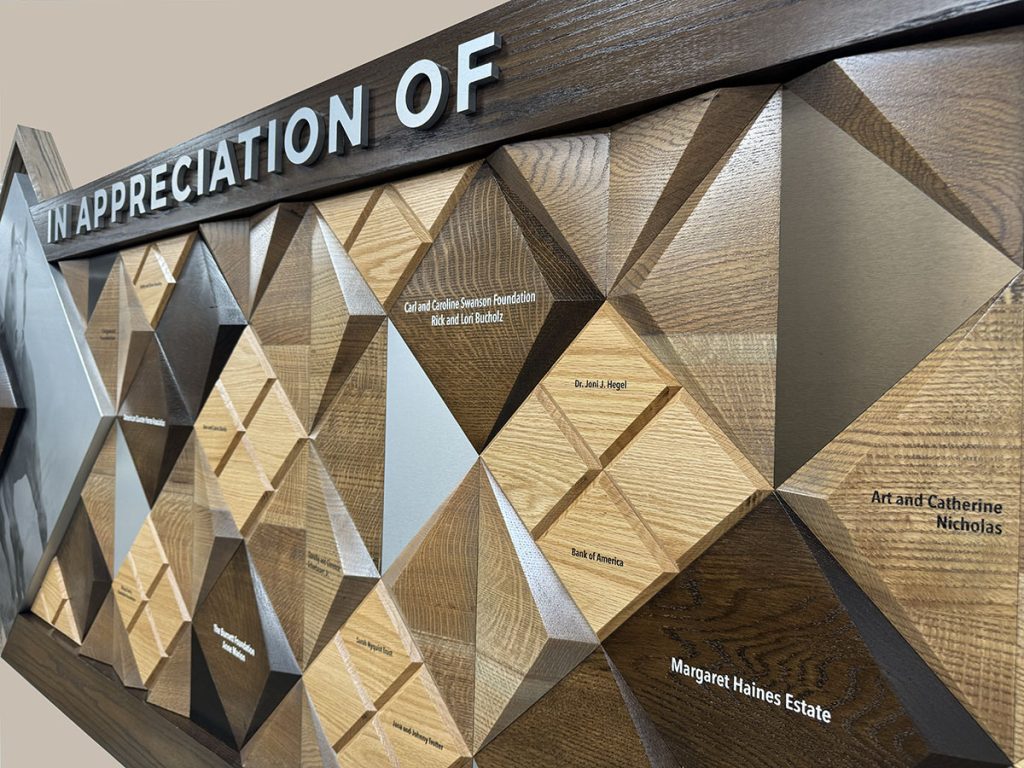
The Foundation liked the intermixed appearance of the donor nameplates. Therefore, they did not want large headers or strong visual barriers separating each giving level.
PIR explored several approaches, including:
- Stronger grouping and spacing.
- Divider elements.
- Different nameplate depths.
- Giving-level identification at the nameplate.
- More distinct panel arrangements.
- Bringing giving-level information closer to the donor names.
The goal was to create a clear hierarchy while keeping the display visually connected.
Moving Away From Gold, Silver and Bronze Donor Levels
During early design development, the Foundation planned three giving levels:
- $3 million and above — Gold
- $2 million to $3 million — Silver
- $1 million to $2 million — Bronze
However, after showing the design to key donors, the Foundation raised an important concern.
Because the organization is part of the equine competition world, Gold, Silver and Bronze could unintentionally suggest first, second and third place among donors. The Foundation did not want recognition levels to create that impression.
Therefore, PIR removed the Gold, Silver and Bronze terminology from the display.
Instead, the giving hierarchy is communicated through differences in nameplate size, typography and dimensional depth. This kept the levels easy to understand without making one group of donors feel like they had “won” over another.
A Donor Recognition System Designed for Movement Between Levels
This was not simply a matter of leaving room for additional donor names.
The Foundation expected existing donors to increase their giving and move between recognition levels. At one point, four donors at approximately $1.7 million were expected to move into the next level, while another donor still had the potential to move into the highest level.
Because of that, reconfiguration became just as important as future capacity.
PIR needed to create a donor wall that could change without requiring large sections of the display to be rebuilt.
MagTech® Creates an Expandable Museum Donor Recognition Wall
PIR’s dimensional MagTech® system became a central part of the solution.
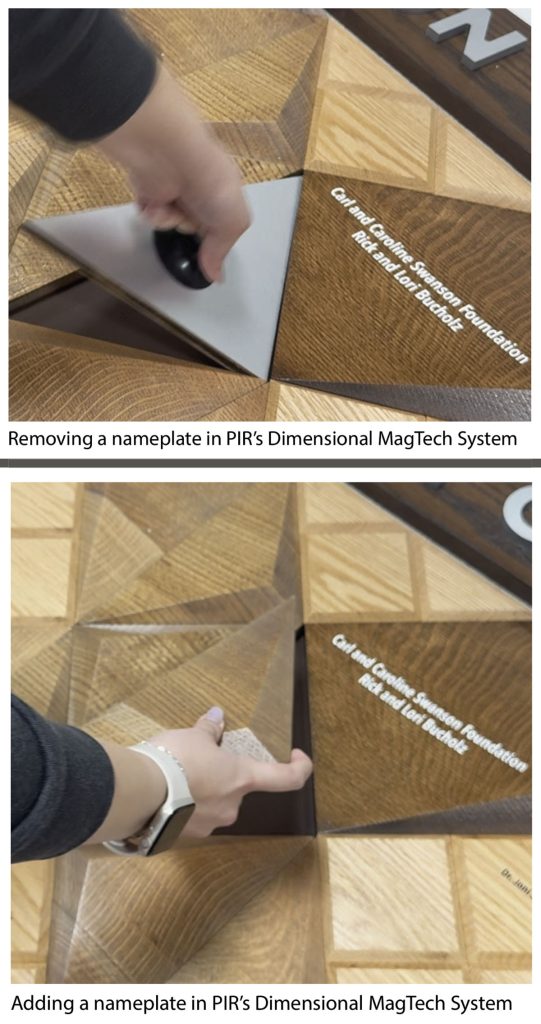
An enclosed galvanized steel backer sits behind the recognition area. Each removable donor nameplate is secured with four rare-earth magnets, while permanent dimensional pieces help create the border and overall pattern of the display.
The different nameplate sizes were specifically designed to work together.
For example, combinations of smaller donor plates can be replaced by a medium or larger plate when a donor moves into a higher recognition level. This allows the Foundation to rearrange the display while maintaining the overall diamond pattern.
As a result, donors can move between giving levels without forcing the Foundation to redesign the entire donor wall.
Addressing Concerns About Magnetic Donor Nameplates
During the review process, some donors questioned whether magnetic nameplates could be easily removed or might fall from the display.
PIR addressed that concern before shipment.
The rare-earth magnets are extremely strong and require deliberate effort to remove. When the completed display was fully assembled in PIR’s facility, videos were taken showing staff members physically removing the nameplates.
Those videos were shared with the Foundation so they could see exactly how much effort was required.
The finished system holds the plates securely during normal use, while still allowing authorized staff to intentionally remove and reposition a nameplate when a donor changes giving levels.
Planning Donor Nameplates Around Real Donor Names
Another important part of the project was making sure donor names would fit properly within the diamond-shaped nameplates.
Because the three nameplate sizes have different usable areas, PIR developed character-count guides before the final donor list was placed into production.
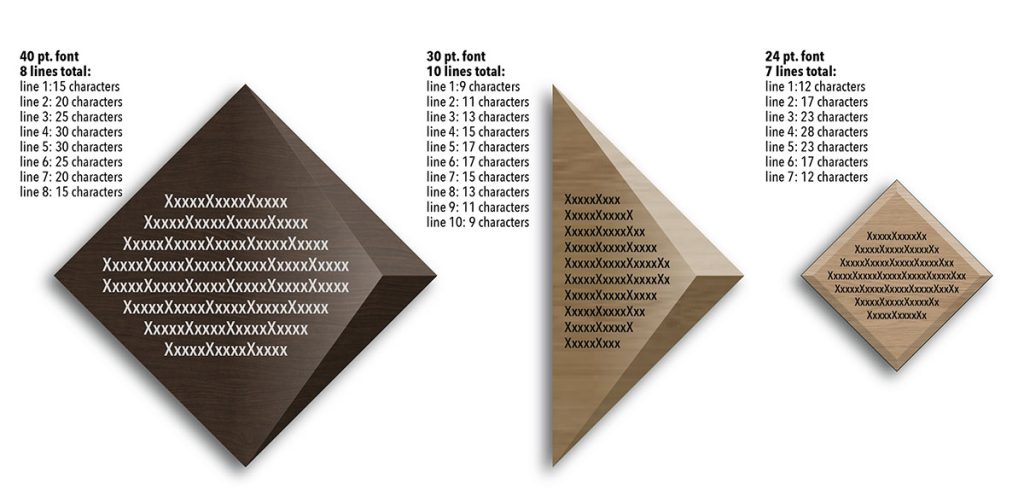
The final guidelines were:
- Large nameplate: 40-point font with 8 lines and approximately 15–30 characters per line.
- Medium nameplate: 30-point font with 10 lines and approximately 9–17 characters per line.
- Small nameplate: 24-point font with 7 lines and approximately 12–28 characters per line.
The Foundation used those guidelines while finalizing donor names. After the order was entered, each donor name was placed into the appropriate plate and proofed for approval.
This planning helped avoid a common donor recognition problem: discovering too late that a long donor or foundation name will not fit properly within the intended recognition space.
Materials That Fit the American Quarter Horse Museum
The display needed to feel like it belonged in the Hall of Fame & Museum.
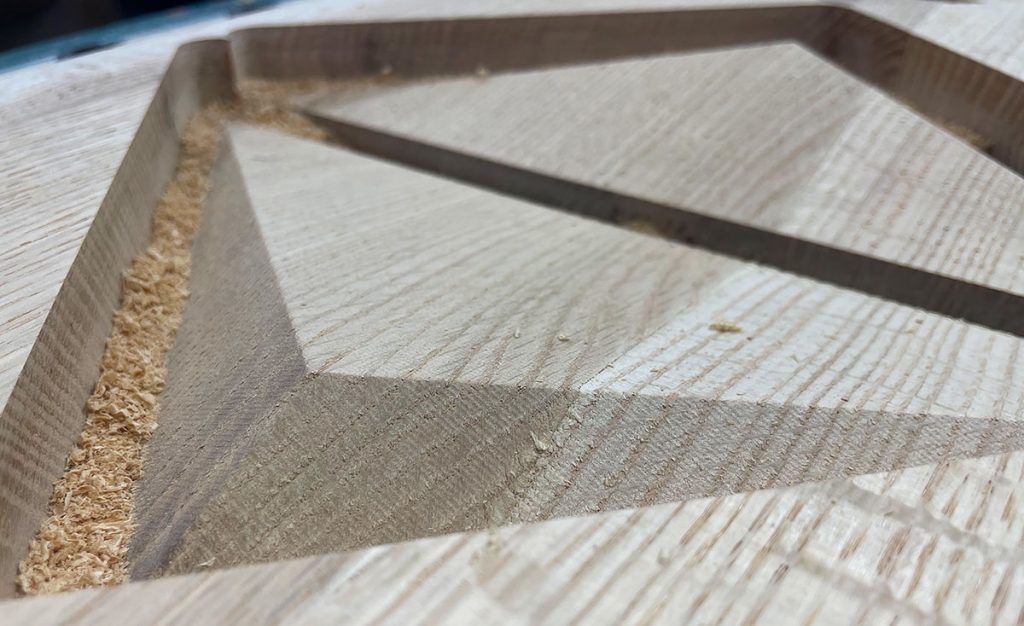
Therefore, PIR used a combination of dimensional wood tones and metallic finishes. The repeating diamond shapes create movement across the display, while the varied depths create natural shadows and visual interest.
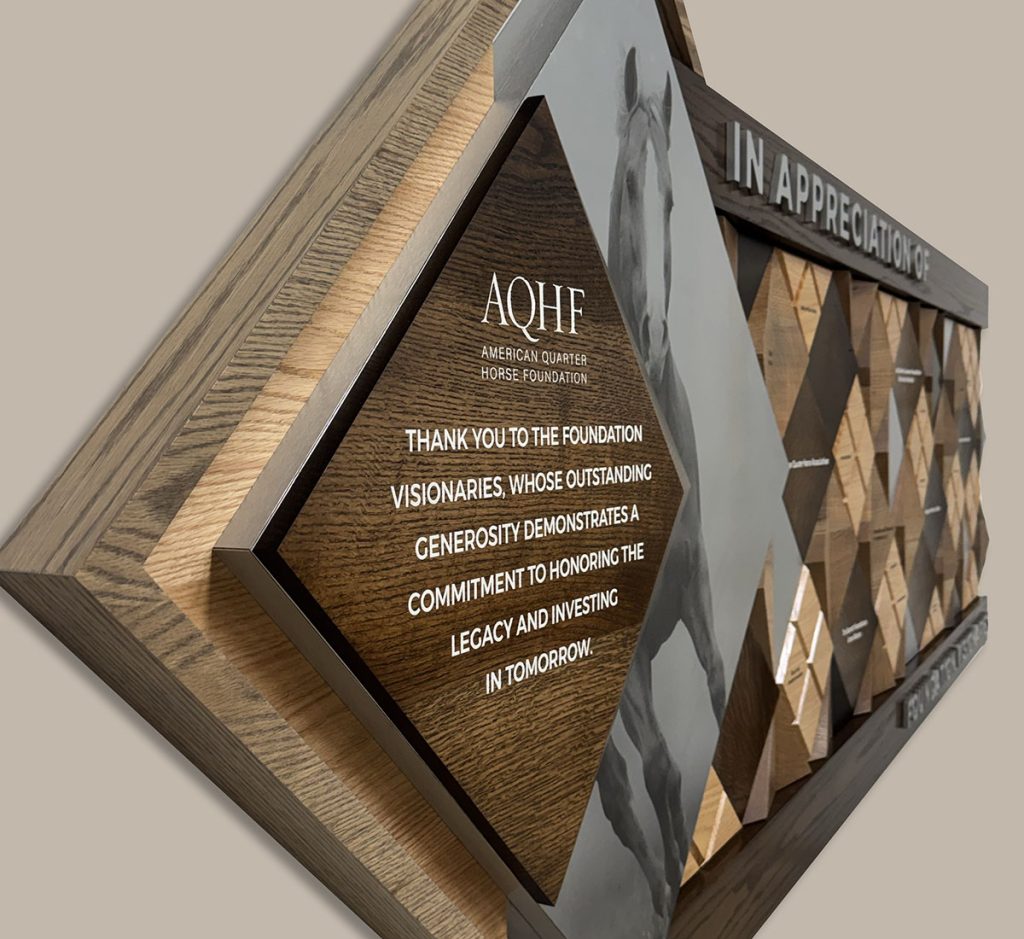
The final composition also includes a large equine image and Foundation message on the left side of the display. Together, these elements connect donor recognition directly to the American Quarter Horse Foundation’s mission and identity.
The header “In Appreciation Of” and lower identification “Foundation Visionaries” frame the recognition area while keeping donor names as the main focus.
Making Future Donor Wall Updates Simple
The long-term update process was discussed before the Foundation placed the order.
For future additions, the Foundation can provide PIR with the donor information and required nameplate size. PIR maintains the original project specifications so new or replacement plates can be produced to match the original material, finish, typography, sizing and construction.
A new nameplate is proofed to the Foundation, produced after approval and shipped directly to them.
In addition, existing nameplates can simply be removed and repositioned when donors move between giving levels. Damaged or missing plates can also be reproduced.
Therefore, the Foundation can continue updating the donor wall without modifying or rebuilding the main display.
Full Assembly and Testing Before Shipment
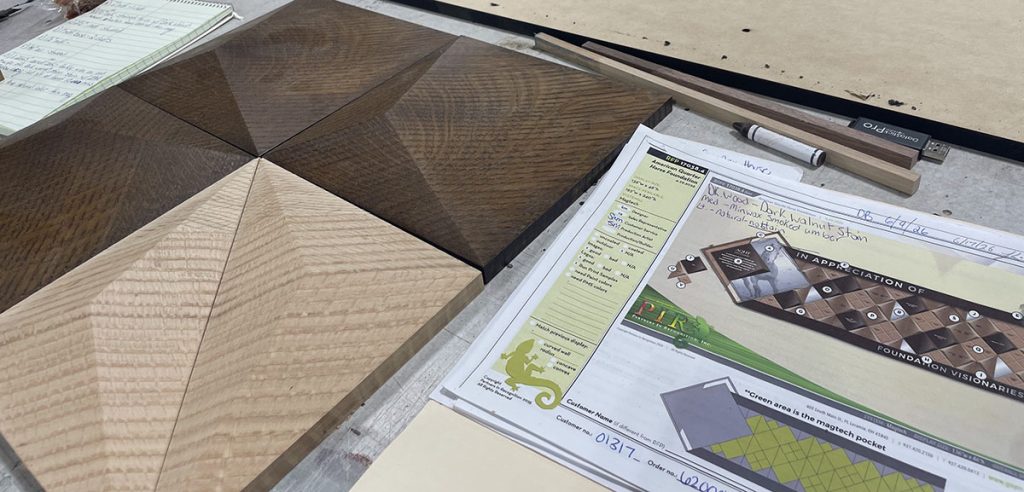
Before the display left PIR, the entire project was fully assembled and test fit in our manufacturing facility.
This allowed our team to check:
- Overall fit and alignment.
- Material finishes.
- Dimensional relationships.
- Placement of permanent pieces.
- MagTech nameplate functionality.
- Final graphics and details.
The Solution: A Custom Donor Wall That Can Evolve
The finished museum donor recognition wall balances visual impact, donor hierarchy and future flexibility.
Different nameplate sizes and depths make higher giving levels noticeable without relying on Gold, Silver or Bronze labels. Meanwhile, the intermixed diamond arrangement keeps all donors connected within one overall composition.
The MagTech system allows donor nameplates to be repositioned as giving changes. Therefore, the display is not limited to simply adding names in empty spaces. It can adapt as donors move from one recognition level to another.
That flexibility became one of the most important parts of the project.
By combining strong visual design with a donor recognition system built for change, the American Quarter Horse Foundation has a display that can continue recognizing Foundation Visionaries for years to come.
Key Takeaways From This Museum Donor Recognition Project
A successful major donor wall needs to consider more than today’s donor list.
For the American Quarter Horse Foundation, PIR planned for:
- Current major donors.
- Future donor additions.
- Donors moving between giving levels.
- Different name lengths.
- Easy future replacement of donor plates.
- Secure but removable recognition pieces.
- Materials that fit the museum environment.
- A donor hierarchy that did not imply first-, second- or third-place status.
The result is a custom donor recognition system that honors major generosity today while giving the Foundation the flexibility to manage recognition well into the future.
If you have questions about our process, don’t hesitate to contact us for more information.