The Recognition Environment Series: Part 3 – Storytelling Through History Displays
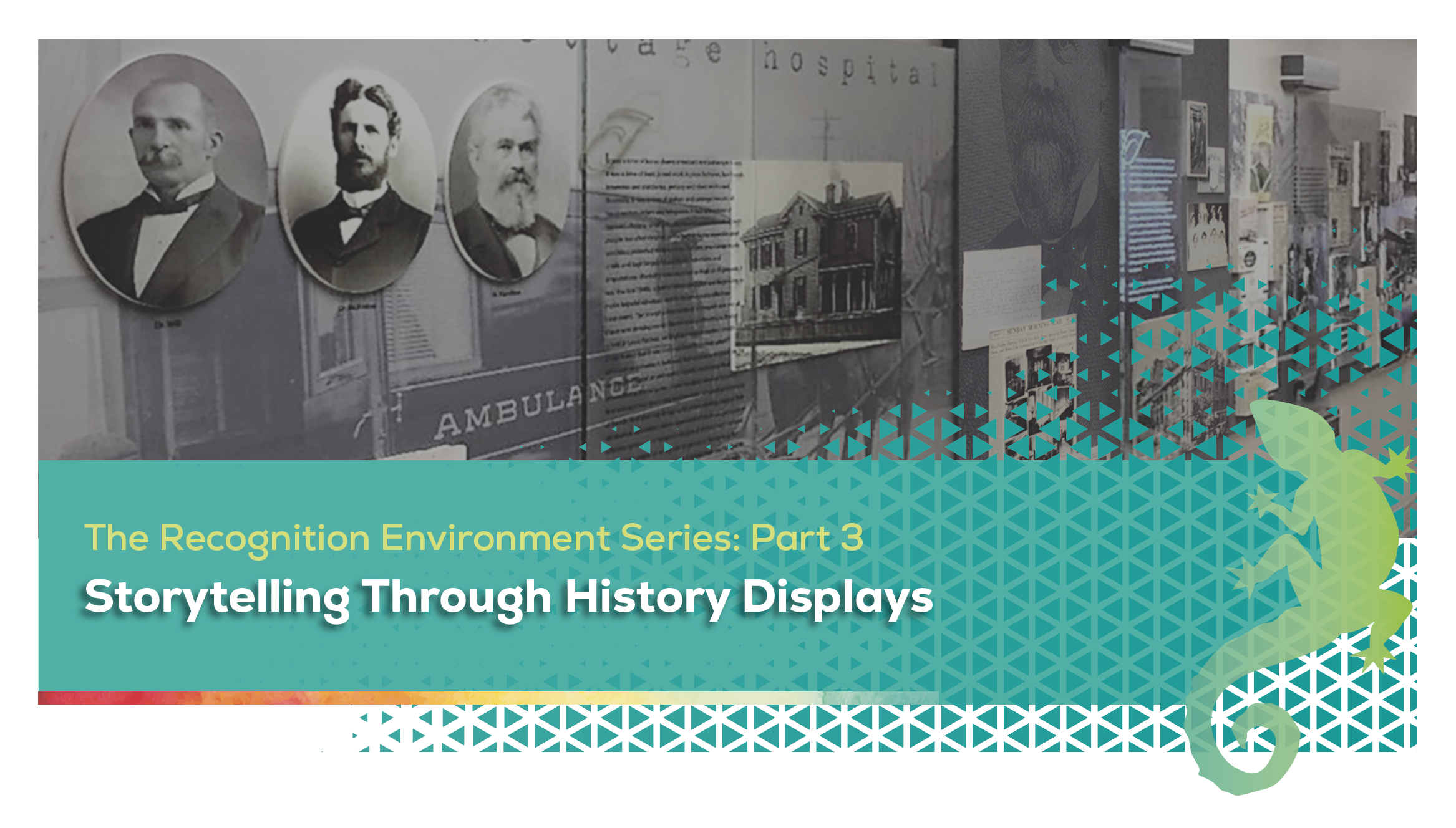
Recognition is often focused on names. Names matter. They acknowledge generosity and create a visible record of support. But on their own, they do not always explain why that support matters. That context lives in the story of the organization. History displays, timeline walls, and storytelling environments provide a way to connect recognition to something larger – mission, milestones, and the people who have shaped an organization over time. When recognition and story are connected, the experience becomes clearer and more meaningful.
Connecting Recognition to Purpose
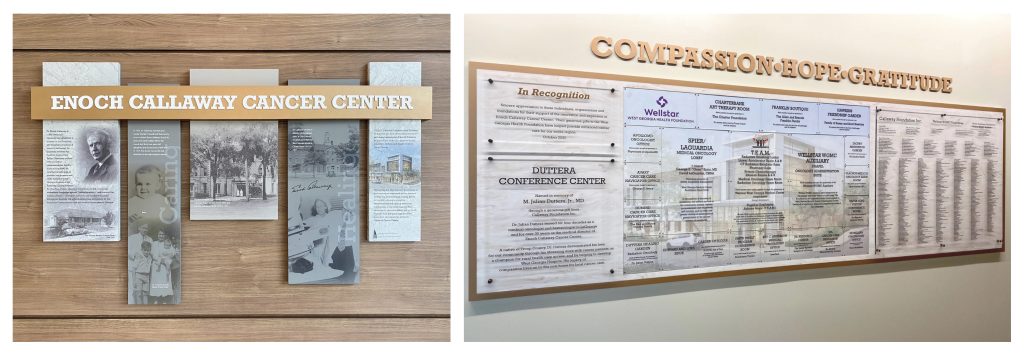
Most organizations have a story worth telling. It may include founding moments, periods of growth, transformative gifts, or the impact of programs over time. These elements provide context for recognition displays and help visitors understand the significance behind the names they see.
History displays and timeline displays create a structured way to present that story. They allow organizations to highlight key moments while reinforcing how generosity has contributed to progress.
This connection strengthens recognition by placing it within a broader narrative.
More Than a Timeline
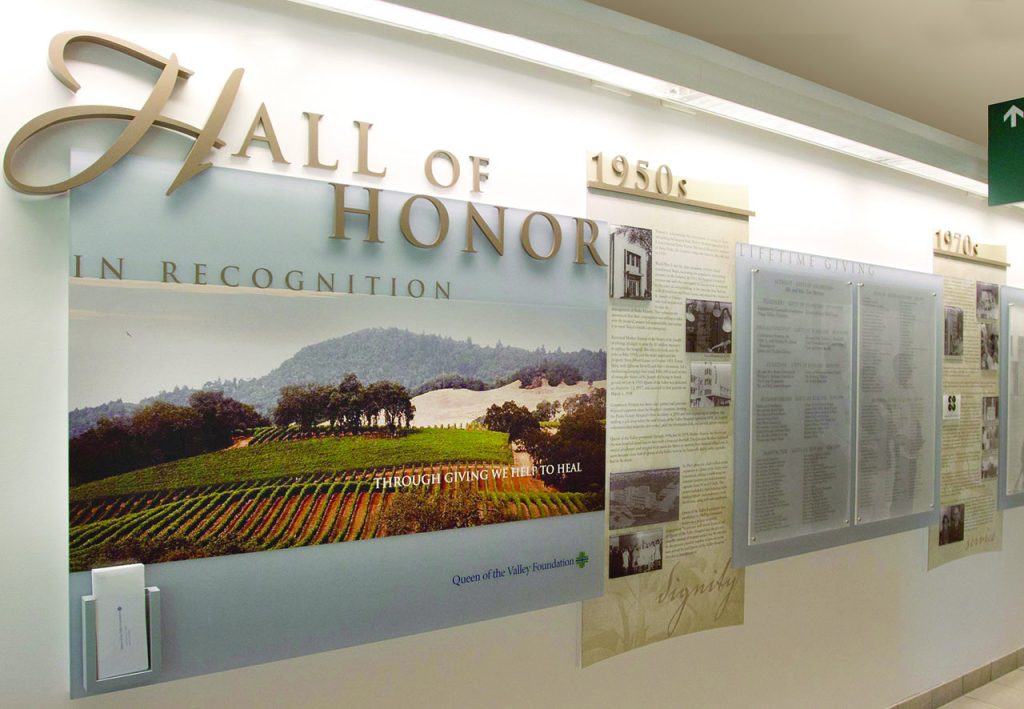
Effective storytelling environments go beyond listing dates and events. They provide clarity. They guide visitors through a sequence that is easy to follow. They highlight moments that matter and connect them to visible outcomes.
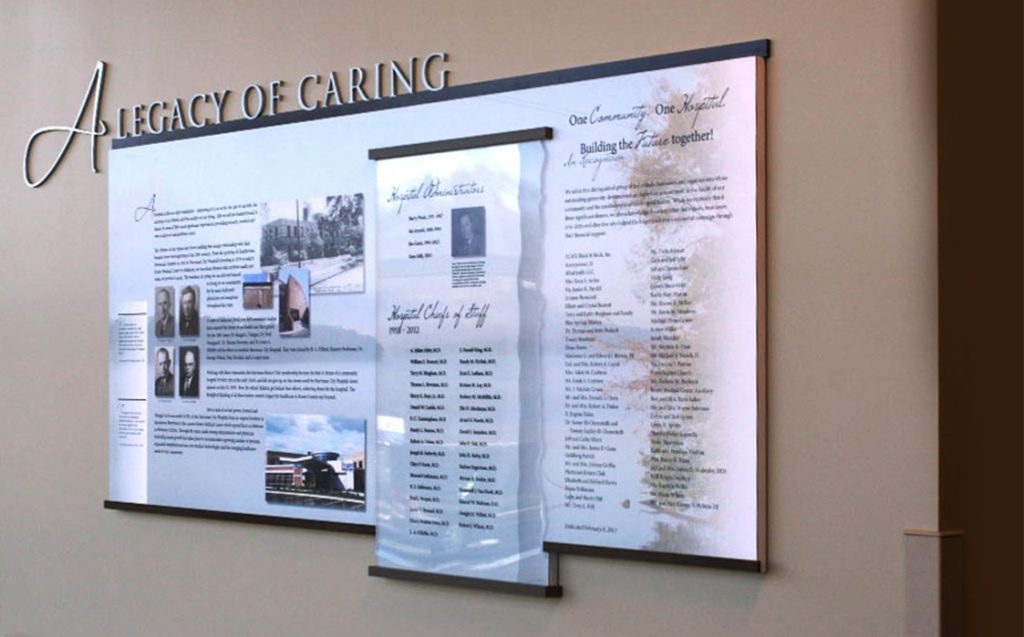
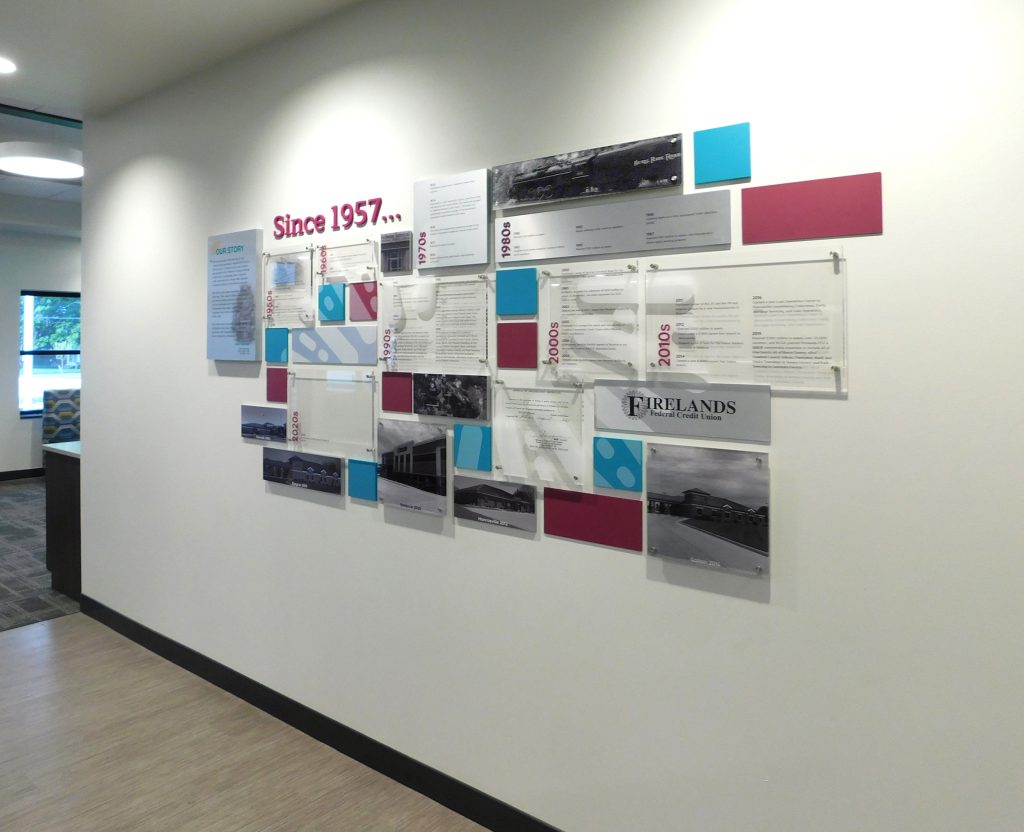
A timeline wall may include major organizational milestones alongside key philanthropic contributions. A history display may incorporate images, text, and recognition elements that show how giving has shaped the organization.
When these elements are aligned, recognition becomes part of the story rather than separate from it.
Reinforcing Organizational Identity
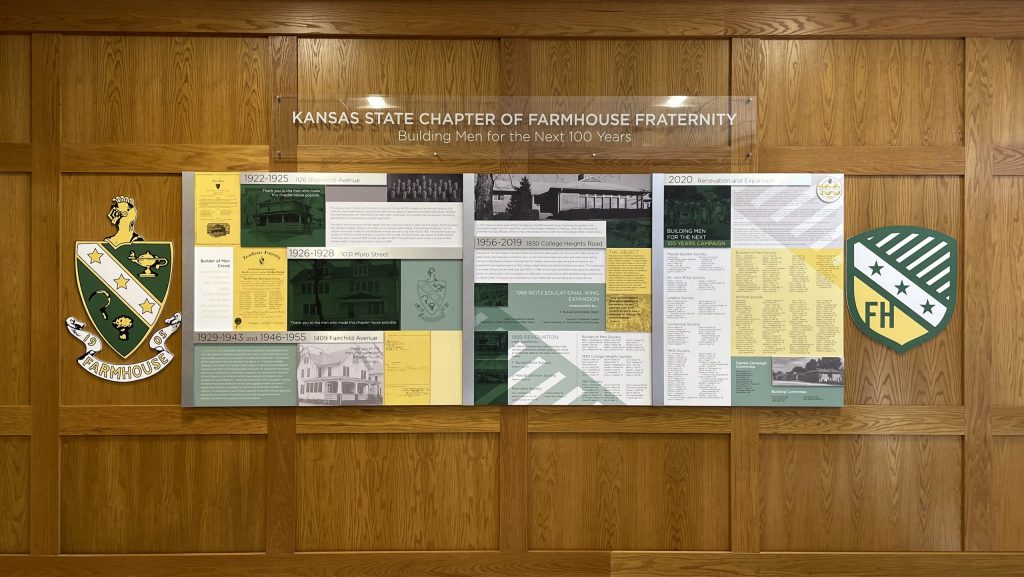
Storytelling environments also serve a broader purpose.
For executive leadership, they reinforce identity. They show where the organization has been and where it is going. For advancement teams, they provide a framework to connect donors to impact. For visitors, they create a clearer understanding of mission and progress.This alignment helps ensure that recognition is not only seen but understood.
Planning for Clarity and Longevity
History and timeline displays should be designed with clarity and continuity in mind.
Content should be structured so it can be easily updated as new milestones occur. Layout should allow for additions without disrupting the overall design. Materials and scale should match the environment in which the display lives.
These considerations ensure that storytelling environments remain relevant over time rather than becoming fixed snapshots.
How Partners In Recognition Supports Storytelling Environments
At Partners In Recognition, we work with organizations to develop history displays, timeline walls, and storytelling environments that connect recognition to mission and impact.
We provide complimentary conceptual artwork and quotes to help teams visualize how recognition and story can be integrated into a cohesive environment. This approach allows organizations to present recognition in a way that reflects both generosity and purpose.
Recognition That Tells a Story
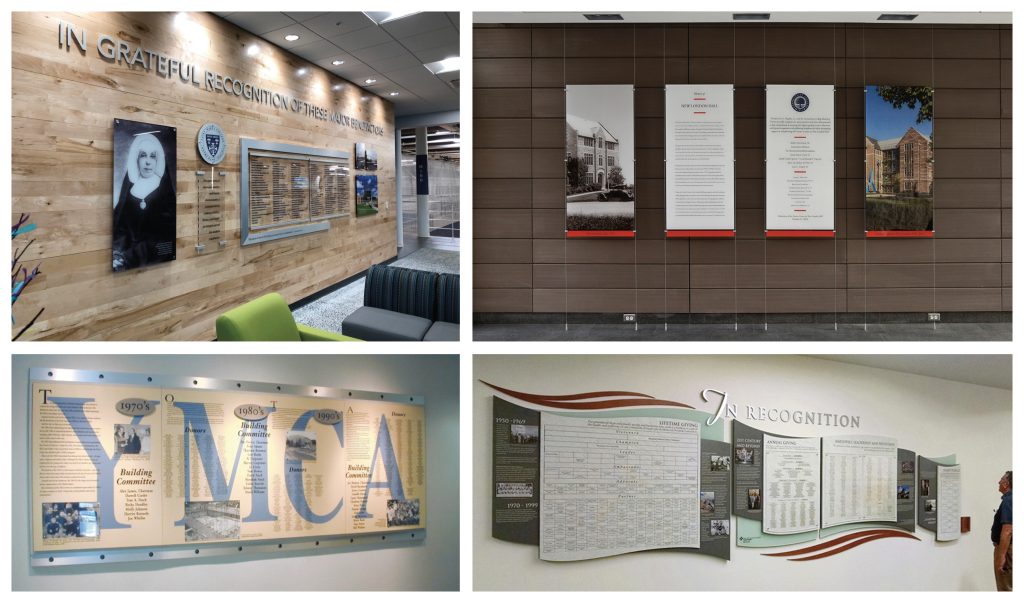
Recognition becomes more meaningful when it is connected to the story it supports. History displays and timeline environments provide that connection, helping visitors understand not only who gave, but why those contributions matter.
The Recognition Environment Series is created by Partners In Recognition to help organizations plan and implement recognition environments that align with their spaces, support their mission, and present donor recognition with clarity, consistency, and long-term relevance.