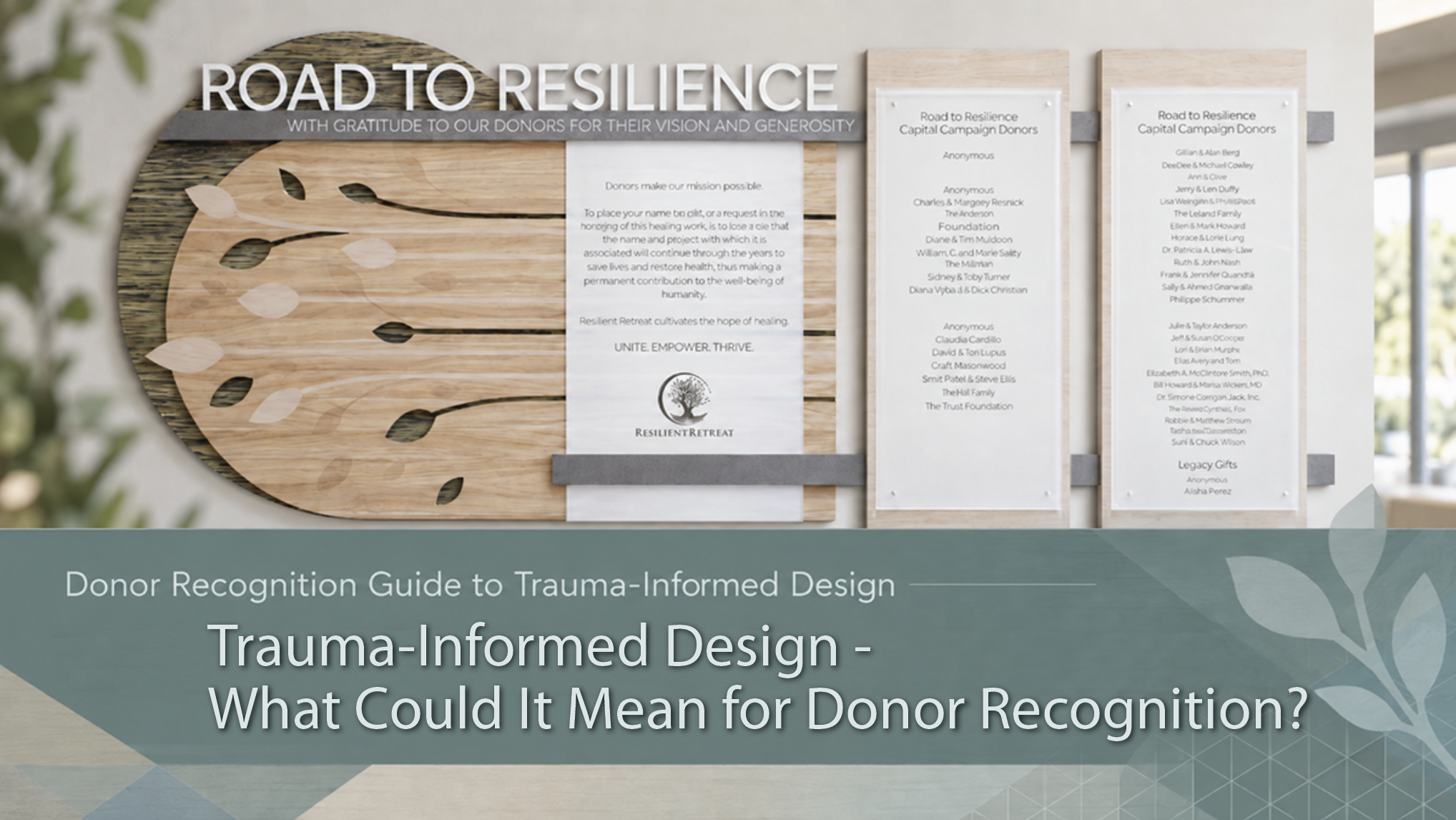
Trauma-Informed Design and Donor Recognition
Introduction to the Series
Donor recognition has always had more than one job to do. It should thank the people who made a project possible, support an organization’s fundraising goals, fit the architecture, and remain practical as names are added over time. But in certain environments, trauma-informed design introduces another important consideration: how recognition displays affect the people who experience the space.
That is especially true in hospitals, behavioral health settings, shelters, community organizations and other places where visitors may arrive worried, tired, grieving or simply overwhelmed. A recognition display becomes part of that environment, whether someone stops to read it or only passes by on the way to an appointment.
Trauma-informed design offers a useful way to look at those surroundings. It asks designers and organizations to pay attention to how a space supports a sense of safety, dignity, privacy, orientation and personal choice. For donor recognition, that can influence everything from the amount of information on a wall to the materials, lighting, location and use of digital technology.
This three-part series looks at those ideas through the very specific lens of donor recognition. We are not suggesting a new rulebook for every hospital or nonprofit. Instead, we are offering another set of questions to bring into the design conversation – questions that can help recognition honor generosity without losing sight of the people that generosity was meant to help.
Blog 1: Trauma-Informed Design – What Could It Mean for Donor Recognition?
Donor recognition usually begins with practical decisions. How many people need to be recognized? Are there giving levels? How much wall space is available? Does the organization want room for future names? What materials will work with the building?
Those are the questions we work through every day at PIR. In certain environments, there is another question worth adding early in the process: What will this display contribute to the experience of the people who walk through this space?
A hospital visitor may be anxious about an appointment. A family may be waiting for news. Someone entering a behavioral health facility may already be feeling uncertain about the environment. The recognition display is not the reason they are there, but it still becomes one of the things they see and experience.
What trauma-informed design brings to the conversation
Trauma-informed design grew from the broader idea of trauma-informed care. In the built environment, the emphasis is less on a particular style and more on how people experience a place. Is the space easy to understand? Does it provide enough personal room? Is there unnecessary glare, noise or visual clutter? Can people see where they are going? Do they have some control over whether and how they engage with what is around them?
Applied to donor recognition, this does not mean the display has to disappear into the background or that donors should be recognized less prominently. It means the design team can consider the donor, the organization and the people being served at the same time.
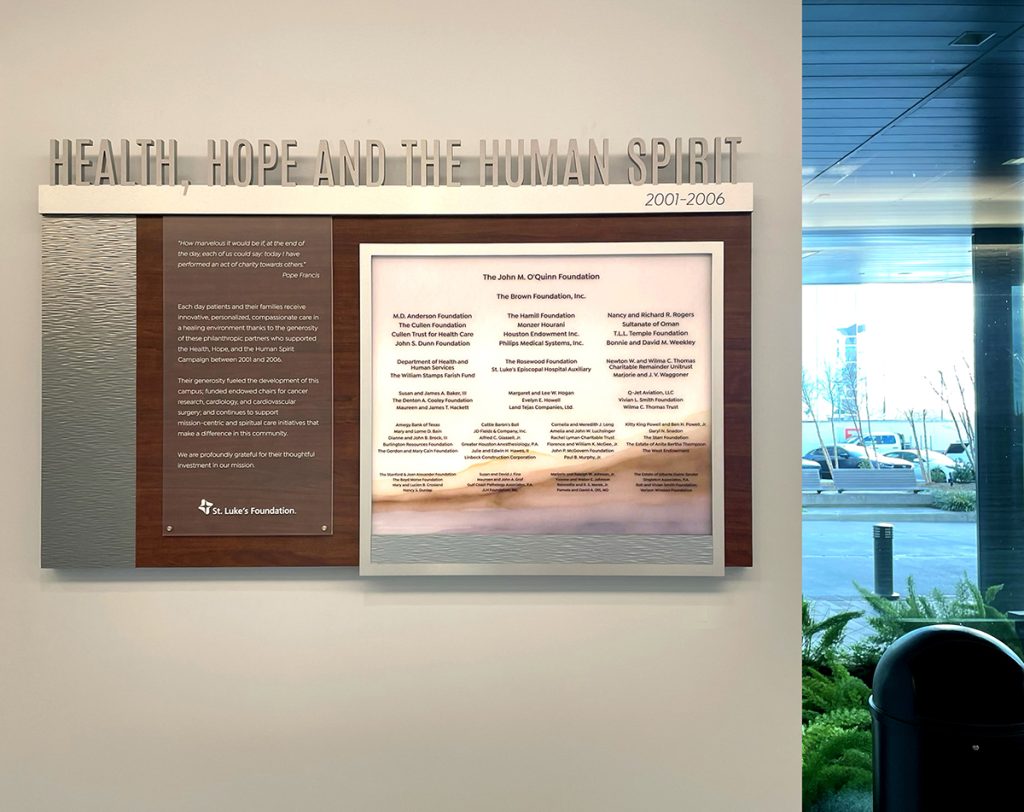
Lead with what generosity accomplished
Giving levels are a familiar and effective part of many recognition programs. They help organizations establish recognition standards and can encourage participation in a campaign. Trauma-informed thinking does not require organizations to abandon those levels.
What can change is the larger story surrounding the names. By incorporating healing-centered design principles, recognition can focus not only on the size of a gift but also on the positive impact donors have made possible. A new cancer center. Expanded pediatric care. A safer place for families. A renovated community space. More access to services.
That shift can make the display feel less like a scoreboard and more like a record of shared accomplishment. Donors are still thanked, but their names are connected to the mission they chose to support.
Tell impact stories with care
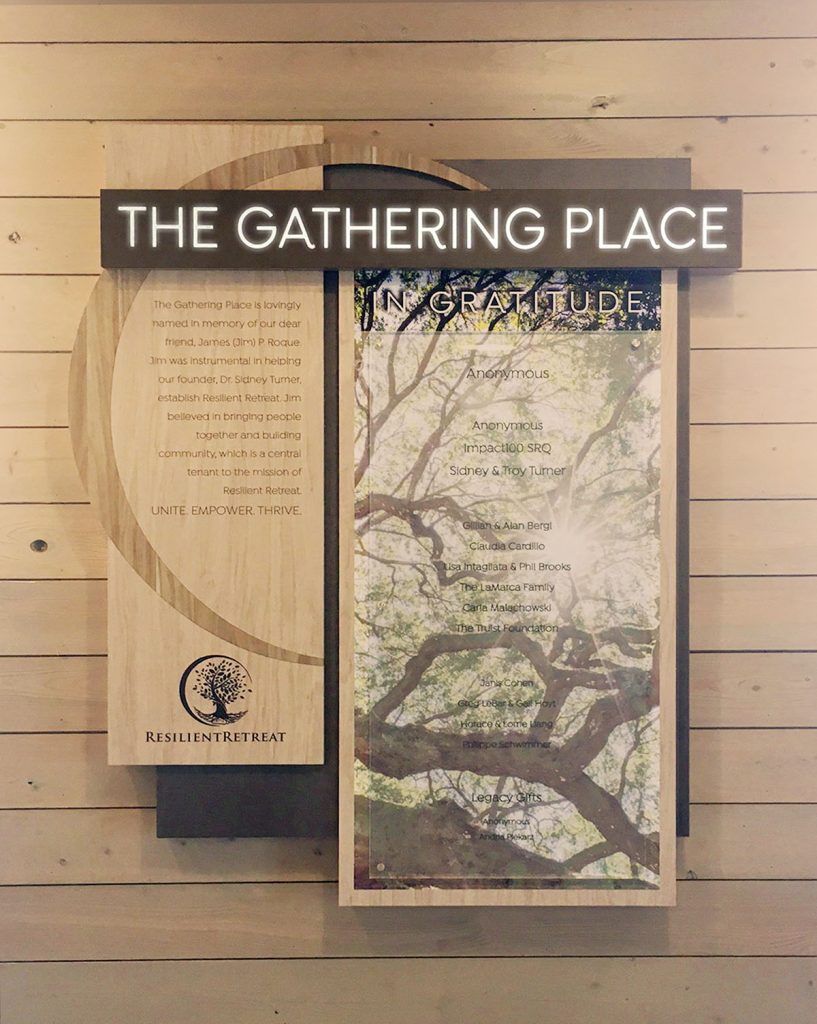
Storytelling can make recognition more meaningful, especially when a display includes photography, digital content or a history of the campaign. But organizations do not have to rely on a person’s most difficult experience to demonstrate impact.
Often the stronger story is the result: what changed because the community gave. A healthcare foundation might show how an outdated treatment area became a more comfortable patient space. A social-service organization might explain that a new facility allowed it to serve more families. A community nonprofit might show a playground, classroom or gathering place that did not exist before the campaign.
This approach keeps the focus on progress and purpose rather than making someone’s trauma the center of the recognition. By incorporating healing-centered design principles, the display can celebrate resilience, hope, and positive outcomes while creating a supportive and welcoming experience for everyone who encounters it.
This thoughtfully designed display for Resilient Retreat demonstrates how storytelling can be woven into donor recognition, creating a meaningful connection between the generosity of donors and the organization’s mission.
Consider how much hierarchy the wall really needs
For decades, donor walls have often communicated gift levels through obvious differences in type size, position and scale. The top category may dominate the wall while lower levels become progressively smaller.
There are situations where that is exactly what the organization wants. In others, particularly in sensitive environments, it may be worth asking whether the same fundraising structure can be communicated more quietly.
Perhaps the categories remain, but the difference in name size is smaller. Maybe donors within each level are presented alphabetically. Material changes, panel depth or grouping can identify levels without creating an extreme top-to-bottom visual ranking. An organization may even decide that equal-sized names make the most sense for a particular campaign.
The point is not that one method is correct. The point is to make the hierarchy a deliberate choice rather than simply doing it because donor walls have always been done that way.
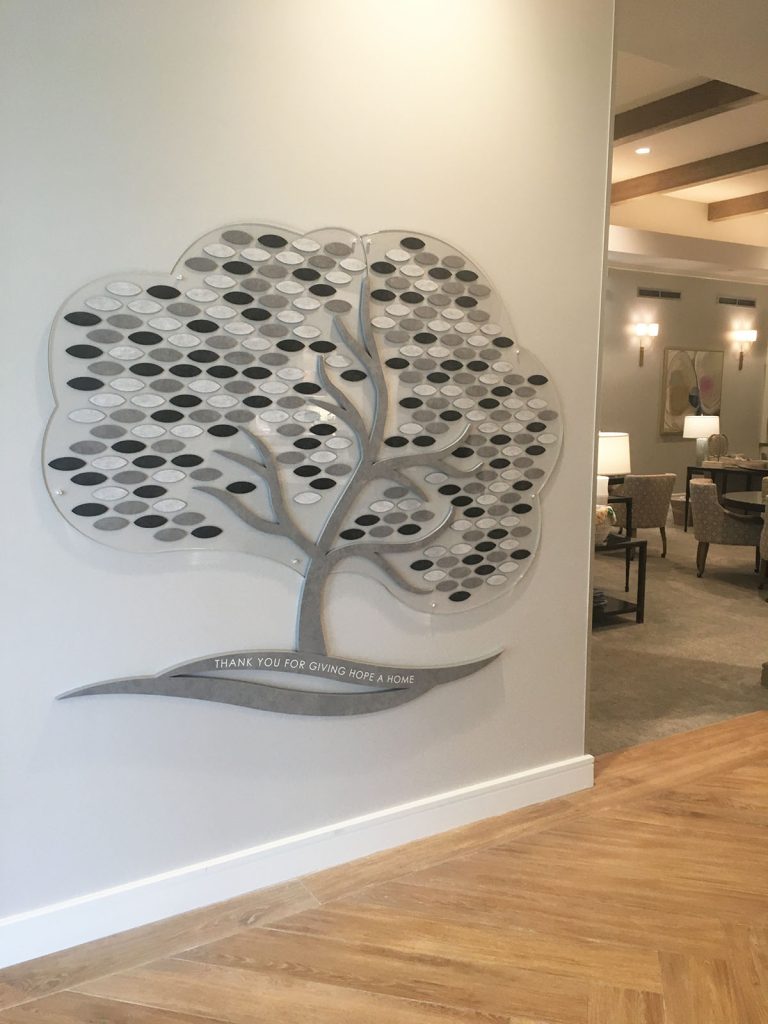
A broader definition of successful recognition with healing-centered design in mind
A donor display still has to accomplish the fundamentals: recognize generosity, meet the organization’s stewardship goals, fit the space and function well for years. Trauma-informed thinking simply adds the experience of the visitor to that list.
That may be most relevant in behavioral health, oncology, pediatrics, shelters and other settings where the emotional context of the space matters greatly. But it is a useful question almost anywhere: Can this recognition be meaningful to donors and still feel appropriate for the people the organization serves?
For us, that is not a limitation on design. It is another opportunity to design more thoughtfully.
This is the first in a three-part series exploring how trauma-informed thinking can influence donor recognition design.