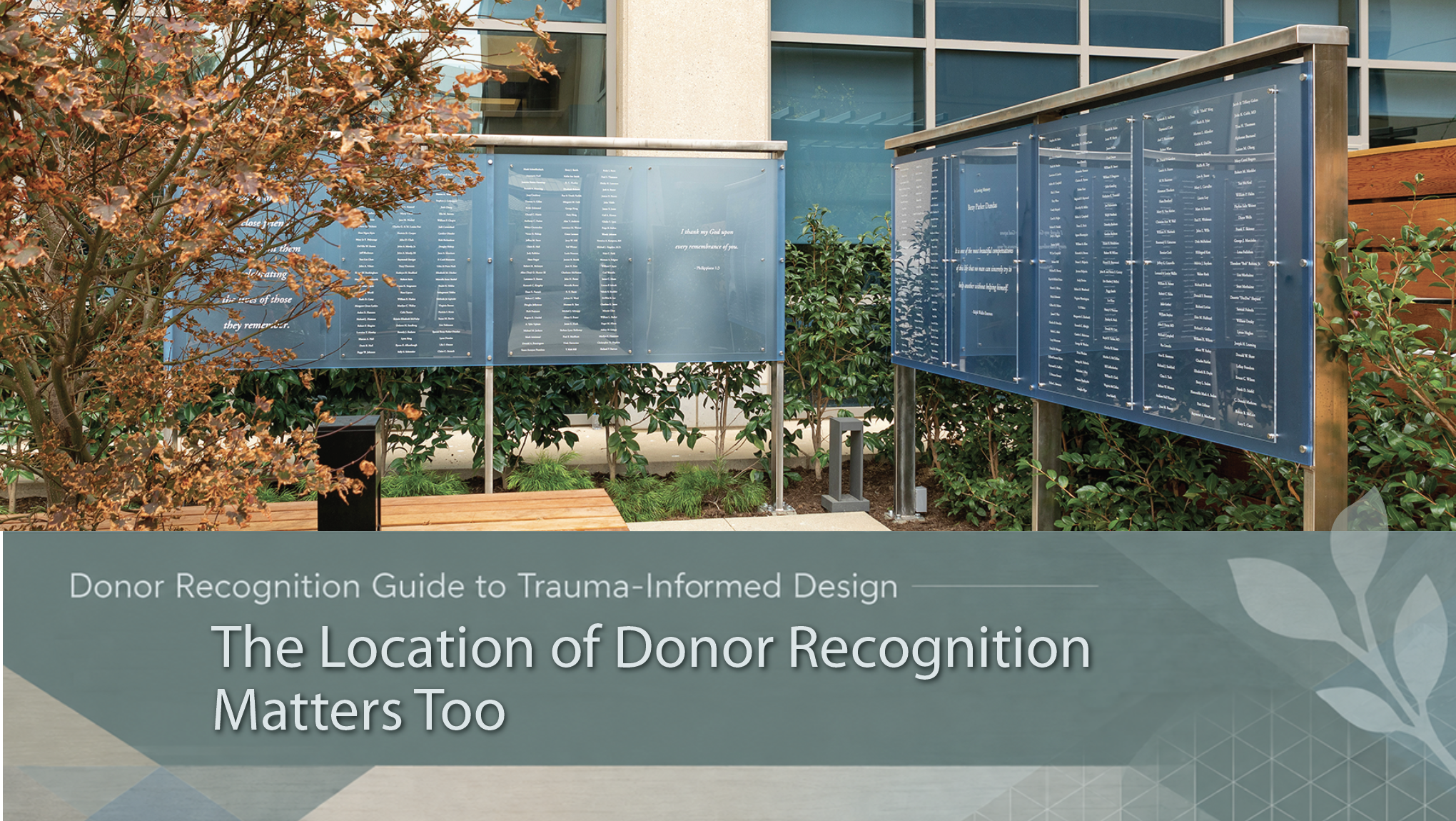
Blog 3: Donor Recognition Display Placement: Why Location Matters in Trauma-Informed Healthcare Design
A donor wall can be beautifully designed and still be uncomfortable to use if it’s installed in the wrong location. Donor recognition display placement is an important consideration in trauma-informed healthcare design because where a display is located can influence how people move through, interact with, and experience a space.
That’s easy to overlook because most recognition planning happens while looking at elevations, dimensions, and artwork. But people don’t experience a donor wall as a flat drawing. They approach it, stop in front of it, walk around other visitors, and continue on to wherever they were headed.
In healthcare and other trauma-sensitive environments, the space around a display deserves just as much thought as the display itself. A thoughtful approach to placement can help recognition become a natural part of the environment without adding unnecessary stress or confusion for the people using it.
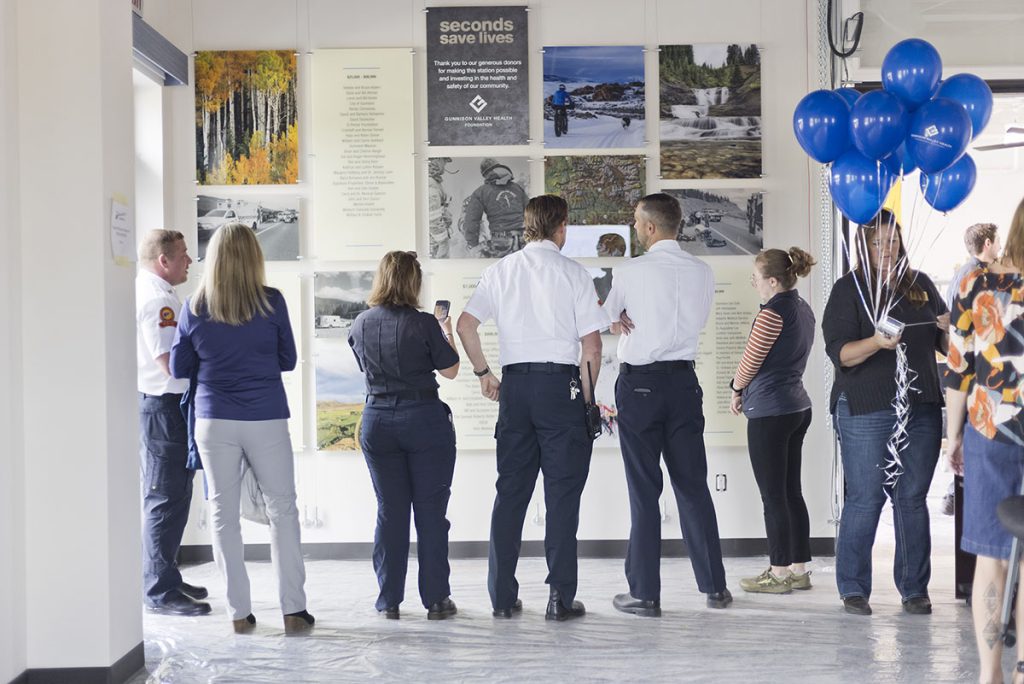
Plan for People to Stop, Not Just Pass By
Recognition invites people to pause. They search for names, read campaign messages, point something out to a family member, or take a photograph. That behavior should be expected rather than treated as an exception.
A narrow hallway may have enough wall area for a large display but not enough floor area for people to use it comfortably. When someone stops, others may have to squeeze around them. In a hospital, that circulation may also include wheelchairs, walkers, carts, IV poles, and staff moving quickly between areas.
Thoughtful donor recognition display placement takes these activities into consideration. When possible, a wider lobby edge, alcove, gathering space, or perimeter wall allows someone to engage with recognition without becoming an obstacle to everyone else.
The goal isn’t simply to find a wall large enough for the display. It’s to find a location where people have room to appreciate it comfortably.
Keep Orientation Easy with Trauma-Informed Healthcare Design
People generally feel more comfortable when they can quickly understand where they are and where they need to go. Donor recognition shouldn’t compete with that.
A large installation can unintentionally block a directional sign, narrow a sightline, or make a corridor feel more enclosed. Before selecting a location, it helps to view the area from several directions and consider what the display will do to the visual path through the building.
This is an important consideration in trauma-informed healthcare design, where clear navigation and a sense of orientation can be especially valuable for patients and visitors who may already be feeling overwhelmed.
The goal is simple: someone should be able to appreciate the display without losing a clear sense of the surrounding space.
Consider Privacy When Choosing a Donor Recognition Location
In healthcare, where someone stands to read a donor wall can matter for reasons that have nothing to do with recognition.
A visitor lingering near a registration desk may overhear a private conversation. Someone using an interactive display might unintentionally have a direct view toward treatment or consultation areas.
Before finalizing a location, look at what a person will see while facing the display and what happens immediately behind them. Check-in areas, pharmacy lines, exam-room entrances, and other places where sensitive conversations occur may not be ideal locations for a display that encourages people to stop.
Privacy and dignity are important elements of trauma-informed healthcare design. Thinking about them early in the planning process can prevent an otherwise successful recognition installation from creating an uncomfortable situation later.
Leave Comfortable Clearance Around Donor Recognition Displays
The wall dimensions tell only part of the story. The floor space in front of it matters, too.
A useful planning exercise is to picture two or three people standing in front of the display at the same time.
Can another person pass behind them comfortably?
- What if that person is using a wheelchair?
- What if staff are moving equipment through the area?
- What happens during a donor event when a group gathers around the wall?

These questions are especially important when considering donor recognition display placement in hospitals, rehabilitation centers, senior living facilities, and other environments where people may have different mobility needs.
The answers often reveal more about a location than the wall measurements alone. It’s also important to coordinate with the facility’s design professionals to ensure required accessible routes and clearances are maintained.
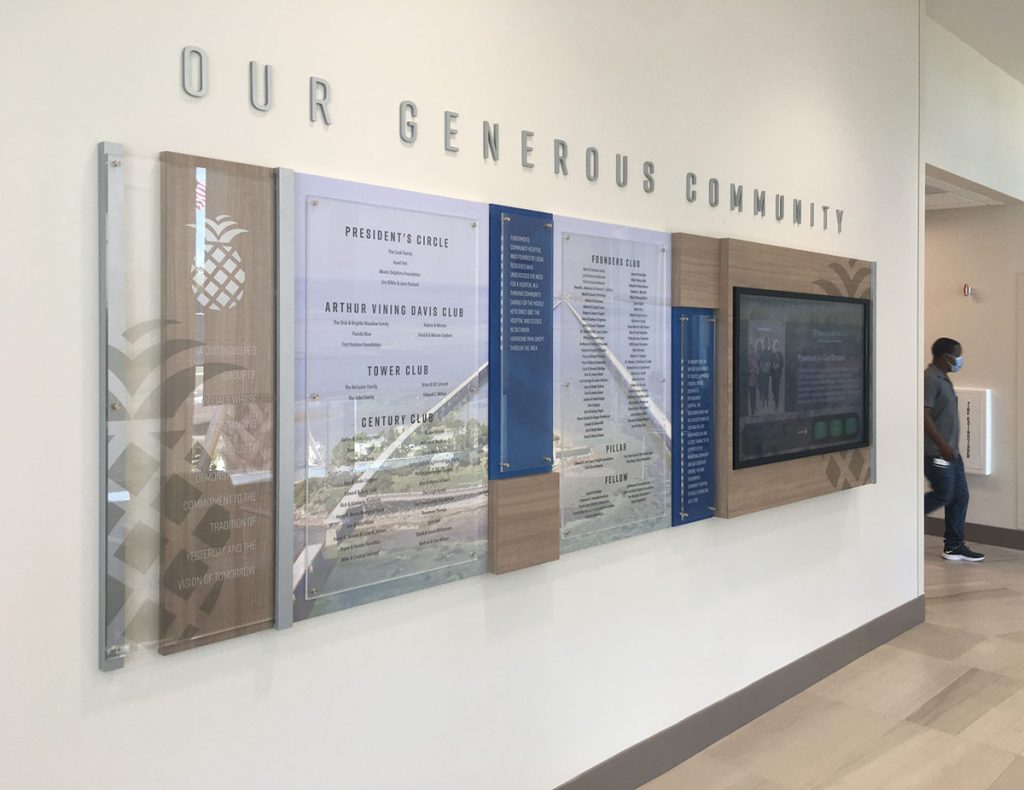
Interactive Donor Recognition Changes Traffic Pattern
Digital recognition adds another layer to the placement conversation because people generally spend more time at a touchscreen than they do reading a static list of names.
A visitor may search for a family member, explore a donor story, or move through several screens of campaign history. Someone else may be waiting for a turn to use the display.
That means a touchscreen installed directly in the main path of travel can create a problem, even when the screen itself fits perfectly on the wall.
When space allows, positioning interactive recognition slightly outside the busiest circulation route gives visitors the option to explore it without making everyone else navigate around them.
Effective donor recognition display placement considers not only how much space the installation occupies, but also how people will interact with it.
Technology Should Invite, Not Insist
Choice is another important consideration in trauma-informed healthcare design, particularly when incorporating digital recognition.
Not every visitor wants motion, sound, or an interactive prompt competing for their attention.
A digital display can still be engaging without constantly calling attention to itself. Sound can be optional. Motion can be restrained. Content can be easy to navigate and just as easy to ignore.
Someone hurrying to an appointment should be able to pass by without feeling distracted, while someone with time to explore should have a richer experience available.
That approach fits naturally with trauma-informed thinking: provide an opportunity to engage rather than requiring engagement.
Before Finalizing Donor Recognition Display Placement, Stand There
One of the simplest things an organization can do is visit the proposed location and imagine the finished display at full scale.
Where will people naturally stand? Which way will they face? Is there room behind them? What can they see from that position? Are there doors opening nearby? Does the area become congested at certain times of day? Will the display compete with wayfinding?
Consider the location from the perspective of someone visiting the facility for the first time, as well as someone who moves through the space every day.
A few minutes spent observing the actual space can identify issues that are difficult to see on an architectural plan.
This is also a good opportunity to involve facility staff who understand how the area is used throughout the day. Their observations can help identify traffic patterns or potential challenges that may not be apparent during the initial design process.
Donor Recognition Is Part of the Visitor Experience
Donor recognition is often described as a wall, display, or installation. In reality, it’s part of a larger environment.
Its success is affected by what surrounds it, how people approach it, and what else is happening in the space at the same time. Trauma-informed healthcare design encourages organizations to be more intentional about those interactions.
The best location isn’t always the biggest empty wall or the most prominent spot in the building. It’s the place where recognition can thank donors, tell the organization’s story, and coexist comfortably with the people moving through the space every day
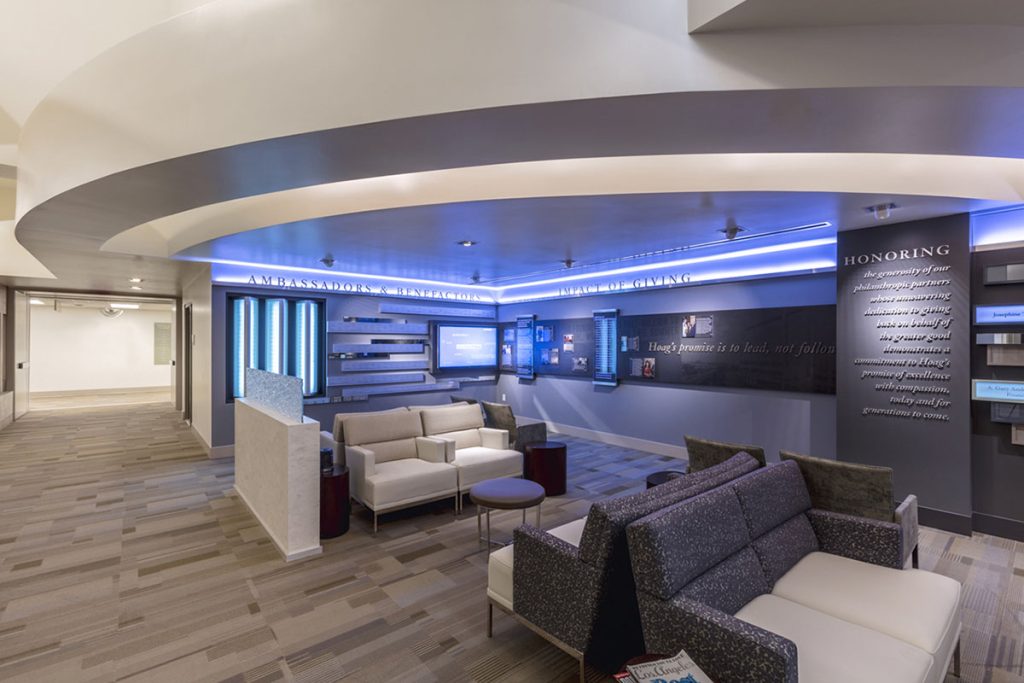
At Partners In Recognition, we believe that thoughtful donor recognition display placement is just as important as the design itself. When both are considered together, recognition can celebrate generosity while respecting the needs of the people that generosity was intended to serve.
This concludes our three-part series exploring how trauma-informed design principles can influence donor recognition. From meaningful messaging and storytelling to materials, lighting, and placement, each decision offers an opportunity to create recognition that honors donors while contributing positively to the surrounding environment.
Editorial note: This educational series reflects trauma-informed design concepts as they may relate to donor recognition. It is not intended to replace project-specific guidance from healthcare, behavioral-health, architectural, or clinical professionals.